4 Future Trends in eCommerce Personalization

Ecommerce personalization has been the hottest trend in customer engagement for a while now. Many consumers can hardly remember what it was like to visit a website that didn’t use at least some degree of this method to better engage with them.

But we’ve barely even scratched the surface of what eCommerce personalization can do.

In fact, you will soon see four ways it’s going to redefine websites – once again – in the very near future.

4 Things to Expect from Ecommerce Personalization in the Future

1. Automation to Support Omnichannel Engagement

Marketing Automation and personalization are largely inseparable. You can’t have the latter without the former.

In the future, automation will become even more important, though, thanks to the growth of omnichannel marketing.

When The Harvard Business Review looked at the behavior of 46,000 shoppers between June 2015 and August 2016, they found that:

  • Only 7% shopped solely online
  • Only 20% shopped solely in-store
  • 73% used multiple channels

Omnichannel marketing is the future, but the only companies that will be able to leverage it will be the ones that can properly utilize automation to offer personalization across all channels.

2. Tailored Deals and Personalized Pricing

Shoppers don’t just differ on what they want to buy. They also differ in what they’re willing to pay.

Traditionally, companies have had to study the array of prices they can charge and pick the ones that give them the most profit, even though it means turning away many potential customers.

That’s changing.

Personalization is showing companies what they can charge individual shoppers.

To some degree, this is already happening. For example, Orbitz used to charge Mac users more – sometimes by as much as 30% – because that demographic tended to have more money. Thus, it stood to reason that they were willing to pay more.

The future will allow companies to drill down into much more granular details, though. This will mean helping more people get the products and services they need at a more accurate price point based on their past decisions.

This approach will also create more attractive bundles and even how promotions are structured for individuals.

3. Inclusion of Offline Data for Ecommerce Personalization

Brick-and-mortar stores don’t have to miss out on the personalization revolution, either. They can use this powerful method to integrate their online and offline customer experiences.

The clothing line Sportsgirl has become a trailblazer in this sense by offering an app that utilizes augmented reality. Users can scan clothing items they like in Sportsgirl’s physical catalog or in their actual stores with their phones so they can then purchase them online later.

4. Machine Learning

Personalization can be about a lot more than selling a product or service. Thanks to machine learning, personalization will soon be about anticipating customers’ support needs before they even have them.

Similarly, machine learning will soon change language websites’ use based on the visitor. In the scenario where a visitor needs help, machine learning will allow the site to find the best answers based on the information they’ve provided instead of the stock replies most are able to give now.

If the site knows that a returning shopper is working on restoring their late-model vehicle, machine-learning will be able to recommend the best possible products but also supply them with relevant content to help with the rebuild.

Embracing the Future of Ecommerce Personalization

Ecommerce personalization is already here, so if your company isn’t already utilizing it, that must become a priority.

However, as we just covered, the future of personalization is already well on its way. Those businesses that fail to embrace these advancements won’t be in business for very long. Fortunately, you now know about four methods you can adopt to ensure your company is able to meaningfully engage with customers for years and years to come.

8 Technology Trends Enabling the Future of Personalized Customer Journeys (2020)

According to Frost & Sullivan, customer experience will become the key brand differentiator by 2020, edging out both price and product. This means eCommerce personalization is here to stay, and brands who can’t connect with the customer to create satisfying experiences will struggle to remain competitive.

Markets are increasingly becoming saturated with similar, high-quality products at slightly varying price points. It’s no longer enough to offer the cheapest goods or even the best product. Paying attention to how customers interact with your brand both before, during, and after the buying process is critical for a winning strategy.

So how can digital marketers create a highly interactive and satisfactory customer experience for their brands? The answer lies in leveraging the best technologies to build immersive, personalized customer journeys across every channel. 

5 Technologies That Are Shaping Personalized Customer Journeys

These eight technology trends enable brands to provide the ultimate personalized experience for the customer.

1. Web Content Management Platforms Facilitate Personalization

“The democratization of capabilities has provided greater agility for marketers and enabled WCM to be formally regarded as key to delivering engaging digital experiences to multiple audiences.” – Mick MacComascaigh and Jim Murphy, Gartner authors

Web content management (WCM) platforms are evolving as the need for personalization influences the software capabilities brands need to implement their customer engagement strategy. Almost all WCMs can automate metadata to optimize content categorization. 

Compared to manually categorizing content, which can be ineffective and inaccurate, automating this process closes the gap created when using drop-down lists for tagging, for instance.

2. Augmented Reality Provides an Engaging In-Store Experience

Consumers no longer need to go to a physical location to purchase a product. Retailers today are considering this by using AR technology to provide an immersive experience outside of the store.

This is a key strategy for the future of retail as 71% of consumers say they would shop more frequently at a store that offers augmented reality and 40% would pay more for a product if they can experience it through AR.

Brands like Lacoste are already using AR apps so that customers can try items of clothing through the app to experience how they would look and feel. Other examples of AR technology include in-store AR mirrors that show you wearing a piece of clothing and signage around stores that can connect to your cellphone to pull up reviews of a product.

3. Voice Interactions to Add to the Audiovisual Experience

According to a survey of 500 IT decision-makers, 88% believe that voice technology would give them a competitive advantage when it comes to enhancing the customer experience. 

As voice technology becomes more and more functional and engaging, customers won’t think twice about interacting orally with brands through apps. The Starbucks barista app––which allows users to speak orders into their phones––is a prime example of consumer-facing voice technology.

4. Smart Cars Bring the Brand to the Driver

Cars today are no longer pieces of assembled hardware. They are built around sophisticated software that brands can utilize to create an on-the-road experience for customers. 

For example, General Motors cars come with a featured called Marketplace on the car screen, through which drivers can place orders from brands like Starbucks or Dunkin’ Donuts. The technology offers consumers both convenience and experience that comes to them, rather than the other way around.

5. Artificial Intelligence Suggests Relevant Data to Customers

AI and machine learning are the difference between a brand that stops at personalizing emails by using the customer name and one that can give customers exactly what they want by offering relevant information.

Perhaps the most powerful example of a brand that uses this technology for maximum advantage is Amazon, which reportedly drives 35% of its sales through its recommendations feature. Artificial intelligence can determine customer behavior by mining through the troves of data generated by their browsing and purchase histories. Machine learning continues to improve this process by using new data to narrow down the customer profile further.

Create Personalized Customer Journeys That Don’t Sacrifice Your Content

The technology certainly exists to enhance brand experiences for customers. But implementing that technology without sacrificing the heart of the experience—your content—will be a tough task if you don’t have a modern, flexible content management system (CMS), such as a headless CMS, in place.

Not only will a headless CMS organize all your cross-channel content in one place, but it can also help you create more engaging personalized customer journeys.

The Holiday Email Marketing 2020

The holiday season is one of the busiest and most lucrative times of the year for many businesses. Last year, holiday retail sales climbed 4%, which led to $658.3 billion in sales, according to the National Retail Federation. With more people buying online, holiday shopping starts earlier and earlier. Start planning your holiday email marketing now to take advantage of this trend.

Why email makes the best holiday marketing tool

Holidays—no matter what time of the year—provide an excellent opportunity to reach out to not only current subscribers, but to help generate even more leads by promoting the need to “share” the value you offer to your subscriber’s family and friends.

Emails are made for our mobile world

Your subscribers rely on their smartphones and tablets for all kinds of information, and research shows a growing number of consumers are doing their holiday shopping on mobile devices. In the past four years, purchases made on mobile devices jumped from 3.4% to 36.7%, according to a report by Castor. In addition, a whopping 76% of Black Friday emails and 63% of Cyber Monday emails were opened on a mobile device, according to Movable Ink. In this busy season, we can help you keep your customers up to date and purchasing with our mobile-ready email templates.

Emails offer instant buying options

Research shows 41% of retailers will use “Buy Now” buttons in their email marketing, making it extremely simple for subscribers to make a purchase. By using a call-to-action button in your email, you can highlight a gift, a special offer, or even an event that a subscriber can buy in a matter of a couple of clicks. Keep in mind your customers are just as busy as you are during this time of year, and anything that can speed up their holiday shopping will benefit them, and your business.

Emails can support all of your campaigns

Businesses can use email to promote sales, invite subscribers to holiday events, showcase unique gift ideas or even gift guides—the list is endless. It allows business owners to reach out to customers regularly and stimulate sales throughout the season. Email can also support other marketing initiatives, such as social media sales, contests, and reward programs.

Automation and personalization makes email more effective and efficient

The holidays are busy in every way, so put marketing automation to use by automating a variety of your email campaigns, from welcome emails to offers and reminders. To get ideas, check out these 9 inspiring examples that use marketing automation. Additionally, you can segment your emails to create personalized messages, as personalized emails deliver 6x higher transaction rates.

2020: An Era Of Personalized Digital Marketing

Too much data often gives marketers a massive headache! Given the amount of information that is available in the digital space, this is almost inevitable. Today, there are multiple databases within divergent fields, functioning on distinct formulas.

This means yielding effective results in all marketing efforts is even a bigger task because customers now yearn for personalization. The point is any marketer, brand or organization can deliver products and services.

But a successful marketer, brand or organization will deliver the right kinds of products and services the way customers want, how they want and when they want. Thanks to personalized digital marketing, that is easily achievable.

The rise of behavior-based sales triggers

The foundation of personalization is customer data. This makes data acquisition an utmost priority. Despite the abundance of channels, the key is to ask the right questions and getting data-based answers that can give a clear picture of what the customers want.

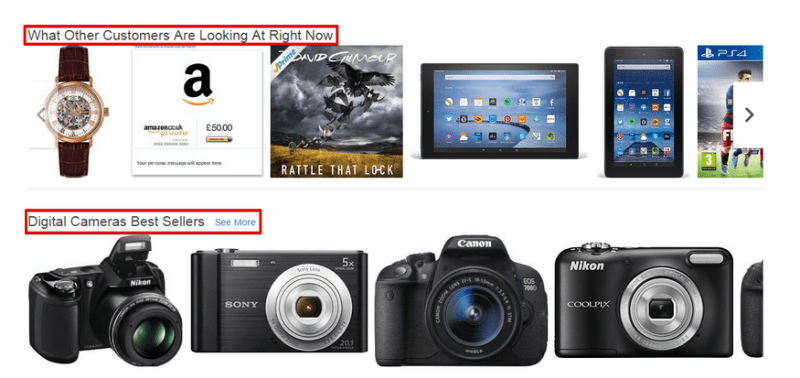
According to a report by Kissmetrics, the more a customer is engaged with a brand, the better his or her response to the brand will be. Amazon, for instance, is known for sending out emails of recommended items – an observation made solely by the customer’s shopping history with it.

consumers-appreciate-personalized-marketing-etailinggroup

Such triggers witnessed a 125% higher open rate than other types of email marketing. This is just one example of personalization. Content is of prime importance too! Boring content won’t generate the number of leads marketers desire.

Amazon targets the right person at the right time via product recommendations. Check it out:

12

A study by Aberdeen Group Research suggests a rise in conversion rates by 10% provided the content is tailored as per the needs and requirements of the customers. Marketers can curate the right kind of content by asking three questions:

  • Is my content responding to their interests?
  • Is content relevant to them at this moment?
  • How am I going to distribute my content?

When it comes to targeting consumers, marketing efforts can never be too customized. That has major brands working hard to uncover new innovations.

The struggle is real

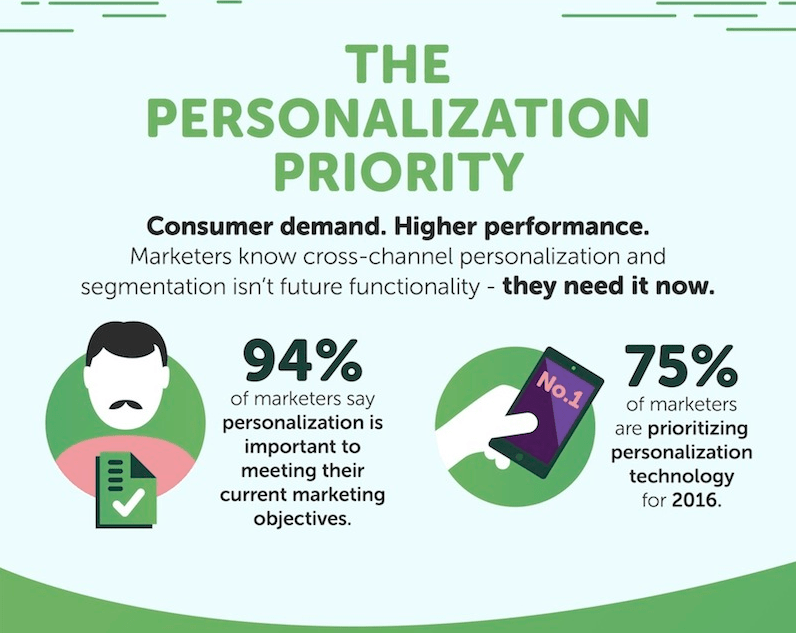
Despite a significant rise in popularity of tailored marketing efforts, marketers still struggle with effective personalization and online targeting. And there is data to prove that such is the case.

According to a study conducted by mobile marketing platform “Kahuna”, 36% of marketers report that personalizing behaviors across channels is still an expected channel in 2016.

46% of companies that technology legacy is one of the biggest barriers to their personalization efforts. Majority of brands ranked themselves below average when it came to extracting useful insights from their customer data.

Capture

How to give the present scenario an uplift

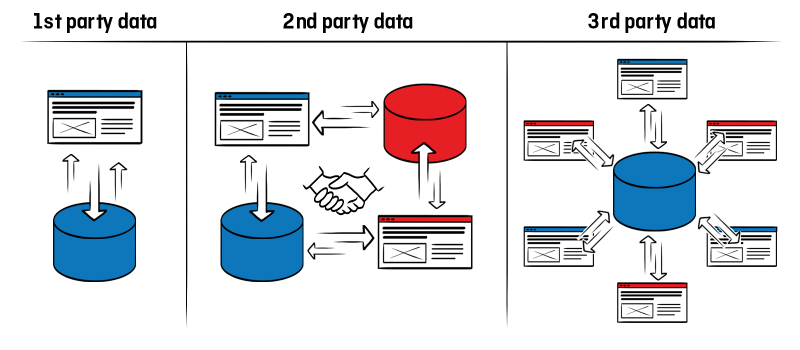
There are three types of personalized information that marketers can make use of:

1. First-party

It is that kind of data that you have gathered as a part of your business operations. Here, the customers consent to share information. It is easy to learn from customer-browsing patterns, point-of-sale transactions, etc.

2. Second-party

This is the kind of data that comes from the competition. Apart from all the benefits of first-party information, the data is received from those partners who are usually connected to the same customers in more ways than a direct transaction.

3. Third-party

This refers to the marketing lists that companies buy to identify and understand the target audience better. Unfortunately, this might not always be a wise option.

There are many data vendors who, under the pretext of discounted prices, sell irrelevant or invalid customer data that ultimately hamper the marketing activities of the companies.

So to make the most of third-party information, marketers should be sure of the sources.

first-party

A digital marketing strategy needs to be frequently revised to stay successful.

The latest trends to keep an eye on in 2019

Technology keeps evolving and we all need to keep up with these latest trends to make sure that we develop successful marketing tactics. It’s the perfect time to reflect on what worked the past year and how the latest trends will affect our marketing strategies this year.

    • Artificial Intelligence: AI will supposedly take over the world! Or may just the world’s simpler jobs. It is great to analyze consumer behavior and search patterns, utilizing data from social media platforms to help businesses understand how users and customers find their products and services.


  • Chatbots: this will continue to be an important part of digital marketing this year as well. This AI-based tech uses instant messaging to chat in real-time, day or night, with your customers or site visitors. Many customers tend to prefer chatbots as they are responsive, prompt in answering, recalls their business history well and also never lose patience.
  • Video marketing: Don’t just think of Youtube here. To witness higher engagement with your video marketing, make video posts, start live broadcast on various social media platforms. It is gaining steady popularity with a large number of businesses using it in the form of interviews, product demo, and ‘behind the scenes’ events, how products are made etc.
  • Social messaging apps: Since people are spending more of their time messaging with each other, it makes total sense to market your company’s services where your potential customers are spending time. Implementing this can be very useful in sending messages to customers directly as they allow personalization, further adding value to the customer experience.
  • Voice search and smart speakers: The increasing use of voice search has made it important for companies to rethink their digital marketing strategies this year. Voice search plays an important role in providing all the relevant information that users are searching for through audio content. Many brands have included it already in their digital marketing strategies to be able to deliver value-based content effectively.


Wigzo: A perfect tool for delivering new-age personalization services

Every customer is different and desires to engage with the brand in a different way that is driven by personal preferences and interests. In this time and age, customers are the “king of the market” in the truest sense.

Therefore, it is a challenge for marketers to consider all such individual differences and personalize their communication with the target audience to fit their expectations.

wigzo

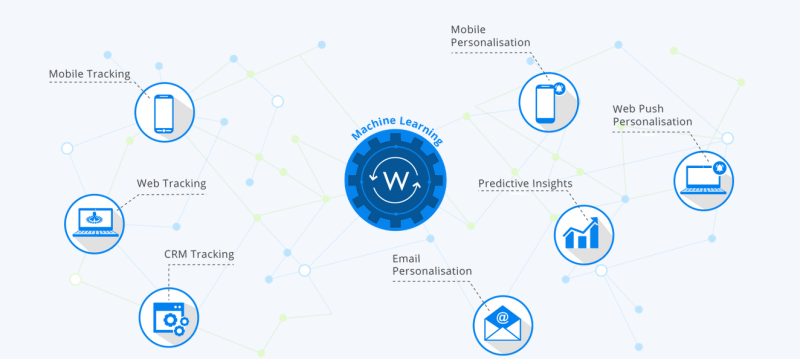
Wigzo, a marketing automation suite, offers solutions that create personalized experiences across all customer touchpoints from a single, integrated digital marketing platform.

It helps brands forge an interactive relationship with the customers based on real-time, bespoke communication, spurring them to convert their purchasing intent into action.

It leverages Big Data Technology to bring relevance to the customer data, and empower it with predictive insights and intelligence to communicate the relevant and the right message to the customers.

Wigzo syncs Prediction Technology and Algorithmic Merchandising to generate content based on customers’ browsing data, app behavior, purchase behavior and search behavior to enable personalized communication across all channels such as Email, Onsite, Push, and Social.

Conclusion

48% of customers agree they purchase more when marketers leverage their interests and buying behavior to personalize the experience across channels. In short, customers today expect an individual experience. Personalization is not an option anymore. It is a mandate that all marketers, brands, and organizations must take seriously!