6 Game-Changing Online Selling Trends for 2019

One of the most exciting things about being part of the world of eCommerce is that things never stay the same for long. Technology, trends, and products are always evolving: and because it’s so easy to open an online store, the competition is always growing.

This is really just the tip of the iceberg for eCommerce, and savvy store owners understand that to succeed, you have to stay on top of the latest developments. As the percentage of consumers shopping online regularly inches higher and higher, here are 6 online selling trends to keep in mind for success in 2019.

The rise of the chatbot

download

Artificial Intelligence has been in development for some time, and it’s just starting to reach the point where it can be really useful to us: take Siri and Amazon Alexa, for example. AIl now has the potential to positively influence a customer’s online journey in a very real way, through the use of integrated chatbots that deal with questions and complaints.

Already, consumers are starting to feel more comfortable with interacting with machines – partly due to how much time we already spend using messaging apps. With a high (and growing) amount of engagement on apps like Facebook Messenger, conversational commerce looks like it could be here to stay.

Whether the customer is put through to a digital assistant or a human customer service manager, it’s not hard to see why live chat is becoming the preferred method of contact over phone and email. Questions can be answered then and there, while the customer is still in mind to buy.

What does interaction with a chatbot look like? In this example from Slackbot, a website visitor has a question about how to add a guest account.

Slackbot has been programmed to give a comprehensive reply, likely based on the keywords ‘guest account’. Now the visitor has the information she needs right away. It’s natural for there to be limitations at this stage, but the timesaving and conversion optimization possibilities that could be gained from these interactions is still very exciting for eCommerce enthusiasts.

Device distinction

download

The average household in modern society contains more than 7 connected devices, whether that’s laptops, desktops, smartphones, tablets, or even phablets. It’s a lot, but it’s not all that surprising. We’re all borderline addicted to the internet – but research tells us that we prefer different devices for different activities.

Where this relates most strongly to eCommerce is the distinction between shopping on desktop/laptop and on mobile. While mobiles comprise just over 50 percent of web traffic, studies show that customers don’t feel entirely comfortable about making purchases on a mobile, even though they use them to browse online stores.

It seems to be the case that users will happily use their mobiles to research what they want to buy, before switching to a laptop or desktop to make the purchase. So what does this mean for your store?

It’s the word of the moment: omnichannel. To offer the best experience for your customers, your eCommerce store needs to be well optimized for whatever device it’s being viewed on, whether mobile, tablet or computer screen. With a good responsive theme from a mobile commerce platform, store owners can ensure that visitors are getting a seamless experience across devices.

Understanding customer lifetime value

Cltv-heading-image

Just as you would recognize and reward your regular customers if you run a brick and mortar business (or so I would hope), the same principle very much applies to online selling. Today’s consumers have so much choice when it comes to online outlets, so if you’ve managed to get yourself a repeat customer, congratulations – you’ve struck gold! Loyal customers must be nurtured, as over time they will spend 30x more with your company than the average customer.

Customer Lifetime Value or CLTV is a metric used to calculate the value of an average customer at your store. And here’s the tip: you want to increase it.

As discussed in a recent blog post on why CLTV is so important to ecommerce businesses, there are a number of ways to improve customer loyalty. These include offering a true omnichannel experience, creating personalized customer emails, utilizing paid search and making use of targeting and recommendation tools to keep your products fresh in the customer’s mind.

Product recommendations, in particular, are a famous tactic to increase CLTV. Magemail points out some interesting data on how recommendations help increase sales revenue, conversions and some other important micro and macro metrics. Check out their list on 12 product recommendations that can help you convert better and quicker.

To get a better grip on the changing needs of your customers and how to optimize your campaigns, try Wigzo’s machine learning technology.

Data will predict the future

download (1)

Predictive analytics technology is becoming all the rage with online merchants, due to its ability to gather and analyze huge amounts of data from customer profiles and interactions. Based on this analysis, store owners can gain a deeper understanding of their customers and their shopping preferences, and make lucrative adjustments accordingly.

Through profiling, predictive analysis can group together customers with similar traits and use their habits to predict what a similar customer might buy, which allows for more relevant and successful targeting. Available on various different eCommerce platforms, this promises to be a crucial trend for improving eCommerce conversion rates – particularly in the B2B sector, where customers place much larger orders.

Getting personal

download (1)

As we are able to capture customers’ data and analyze it accordingly to influence marketing decisions, now is the time to put this information into effect and create campaigns that are hyper-personalized. Smart online store owners know that customization is key: everything from emails down to social advertising, product recommendation and customer discounts can be infused with a personal approach that will make each individual more likely to become a loyal shopper (remember we talked about this?).

If you want to stand out from the swathe of other eCommerce stores on the internet, you need to reach out on a personal level and use your customer’s’ location, demographic and previous shopping habits to persuade and convert. The best CRM systems do this automatically, using the collective data at their disposal. From using the customer’s name in an email to displaying an ad for a product they recently viewed or favorited, personalization will be the key to winning hearts (and sales) in 2019.

Interactive Product Visualization
vis

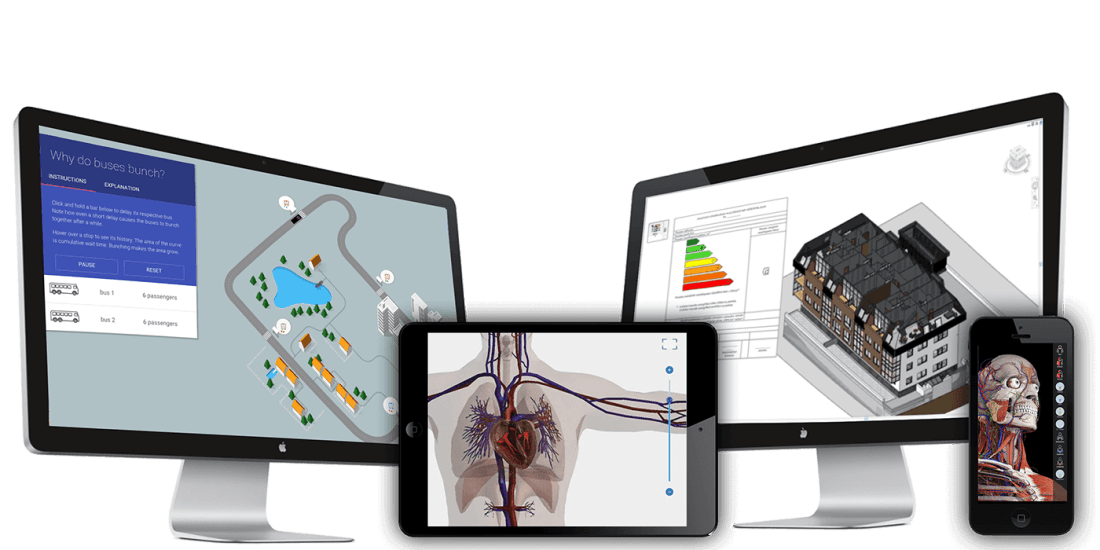
Should that ‘Buy’ button be clicked right away? But one begins wondering–haven’t really understood the quality of this product, is it exactly what I need to buy? Such questions tend to linger on most customers’ minds before they proceed to the next step to make the final payment. Therefore, it arises the need for customers to be able to interact with the product as much as they want to before they commit to purchasing an item. Online reviews and influencers sometimes aren’t enough. Customers want to see the product, feel it and eliminate all that doubt before making the purchase. So, the audience was once satisfied with high-quality product images but today they want more.

Today’s technology lets you use virtual reality, 3D imaging, augmented reality and the likes to be able to interact with products from the comfort of your device screen—laptop o smartphone. E-tailers are increasingly indulging the audience with product videos, evolved to be more engaging and are providing a 360-degree online shopping experience. What this interactive product visualization technology does is that it brings the tangible in-store experience to the online platform and helps eliminate that hesitation before the purchase.

With such low barriers to entry, eCommerce store owners must learn to respond quickly to new trends.

14 Credible Ways To Use Wigzo Web Push Notifications (and what not to do!)

We can’t help but emphasize the importance of using web push notifications to improve customer engagement and retention rate of your business. In the last 6 years, there’s been a spike in the interest to apply the push strategy from firms of different sizes and from different industries.

While push messaging was originally associated with the mobile medium, the strategy gradually trickled down to the browser. Today, push notifications deliver 50% higher open rates than emails. And that’s pretty cool because businesses shouldn’t have to wait for the prospective buyers to open and read their emails.

The businesses should be able to engage with the target market even if the latter is not present on the website. That’s the beauty of push notifications!

Wigzo’s “push” helps clientele achieve higher engagement rate

While emails and social media are still important tactics to stay in the purview of the customers, they are no longer the most effective ones. Even though the push technology seems a bit distracting, it has been able to catch the attention of consumers and convert them into loyal buyers.

1) Inc42 makes use of web push notifications to be able to interact with their website visitors regularly. Wigzo was able to give a boost to Inc42’s average daily visitors and achieve an average CTR of 18%!

2) With the help of Wigzo’s smart segmentation technology, eCommerce store Mr. Button is able to track user interaction and tailor the push messaging accordingly.

If you are still unsure about how Wigzo can help your business amp up its customer engagement level, learn of these new ways in which you can:

1. Recover abandoned shopping carts

If you are an eCommerce firm, then this is perhaps the biggest issue you will ever face! It is really hurtful when the almost-customer suddenly decides to leave a loaded cart behind and move on. With a push message, you can create a sense of urgency to bring him or her back on the website and to complete the purchase process.

2. Send time-sensitive price alerts

Not all of us shop on a whim. We wait for the right deal or a flash sale to shop like a boss! So if the price of a product – that a consumer previously showed interest in – dropped, make sure (s)he hears it from you first through push. After all, who wants to miss out on a deal? This is all but a tactic to nudge them to make interaction on the website.

3. Notify subscribers about an ongoing sale

You may run different discounts for different products. Whether it an end of season sale or a limited period discount – make sure you catch the attention of your consumers before their focus shifts on some other online store. A real-time notification and they will get instantly hooked!

4. Offer location-based tips and discounts

This is a form of hyper-personalization, and will surely bag you a quick conversion. If your website also has a physical store and the prospective buyer happens to be in the vicinity, shoot a quick message to nudge an action from him or her.

5. Re-engage inactive customers

The market is literally spoilt for choice. And consumers today like to hop from one online store to another. So it isn’t surprising to search for a hack that can help you re-engage with such dormant buyers. Pique their interest by sending a notification around a referral program you have started or any other offer that may add value to them.

6. Validate your customers

Just because the consumers have created an account or shared contact details on your website doesn’t mean you take them for granted. Validate their actions by sending a small “thank you” push notification or best – offer them sort of a discount. They would dig that!

7. Leverage social proof

Consumers can be a little hesitant to take the plunge and buy something online. But you can resolve that with the push technology. Show them how many other consumers have bought the same product or how happy they are with your services. A little social proofing goes a long way!

8. Cross-sell and upsell

If your consumers have already chosen a product, don’t let that stop you from increasing the average order value. Give recommendations. Entice with them an add-on (cross-sell) or show them an upgraded version of the product chosen (upsell).

9. Keep the customers informed of their purchases

Once they have ordered a product, make sure you keep them informed about its shipping details through real-time push notifications. That would take some burden off their shoulders!

10. Retarget product or service drop-offs

This kind of messaging is apt for those consumers who put the products in the cart but leave the checkout process mid-way. As they still haven’t left the website, it gives you an excellent opportunity to send a reminder about the cart.

11. Send “back-in-stock alerts”

Your consumer excitedly came to your website to buy a specific product but found it to be out of stock. Don’t let that be the end of it. Once the product is restocked, send a push message updating him or her about the same.

12. Recommend products

So you noticed a consumer checking out a range of sci-fi novels on your eCommerce store. You can pop-up and recommend sci-fi non-fiction that would interest him. Consumers are lazy by nature. If you do a majority of the homework for them, they would love you!

13. Ask for customer feedback on product delivery

Getting feedback is an old-age marketing tactic but it works well because it makes the customers feel important. So once the order has been delivered, send a push message asking for a “token of affection”.

14. Inform about reward loyalty programs

This is a slightly targeted tactic. Make a list of long-standing customers and send them a notification – thanking them for being loyal and offering a credit of $10 or so to show your gratitude! They would hop to your website in a flash!

The Don’ts consider using Web Push Notifications

An effective Web Push Notification campaign can easily outperform Email Marketing and other sorts of campaigns, that is if executed well. After having done some discussion on the ‘Do’s’, here are some ‘Don’ts’ that you must keep in mind when dealing with Web Push Notifications:

  • There isn’t a good idea to get too greedy. If you are too frequent with sending notifications to your customers, close to a 10% users decide to opt-out solely for that reason. Instead, it is more relevant for you to send more contextual notifications based on their behavior and interests and your engagement rate is bound to go higher.
  • Relying on native opt-in prompts? Well, you shouldn’t. Although you might witness a higher opt-in rate initially this will only result in a high amount of churn.
  • If you are keen on using the native prompt, the better and more effective idea would be to build a custom prompt that pops-up right before the native prompt. This will result in better communication of your brand. Even if a user decides to deny it, a custom prompt will enable you to ask again later.
  • It is important to remember the purpose of push notifications. Basically, push notifications are meant to drive users to click and engage with your business. Therefore, the platform isn’t really ideal to explain your customer about detailed and finer points that you have to offer. Instead, link a landing page where your offers are more explained. Remember, the best performing notifications are usually the ones that have catchy titles, precise descriptions, and vivid images.

Over to you

Frederic Voyer, CEO, Swaaap.com aptly puts it right: “Push notifications have been a main factor to ensure that the users in our community are engaged and actively interacting with each other to meet each other’s business needs.”

So what are you waiting for? Get up and get going!

2020: An Era Of Personalized Digital Marketing

Too much data often gives marketers a massive headache! Given the amount of information that is available in the digital space, this is almost inevitable. Today, there are multiple databases within divergent fields, functioning on distinct formulas.

This means yielding effective results in all marketing efforts is even a bigger task because customers now yearn for personalization. The point is any marketer, brand or organization can deliver products and services.

But a successful marketer, brand or organization will deliver the right kinds of products and services the way customers want, how they want and when they want. Thanks to personalized digital marketing, that is easily achievable.

The rise of behavior-based sales triggers

The foundation of personalization is customer data. This makes data acquisition an utmost priority. Despite the abundance of channels, the key is to ask the right questions and getting data-based answers that can give a clear picture of what the customers want.

According to a report by Kissmetrics, the more a customer is engaged with a brand, the better his or her response to the brand will be. Amazon, for instance, is known for sending out emails of recommended items – an observation made solely by the customer’s shopping history with it.

consumers-appreciate-personalized-marketing-etailinggroup

Such triggers witnessed a 125% higher open rate than other types of email marketing. This is just one example of personalization. Content is of prime importance too! Boring content won’t generate the number of leads marketers desire.

Amazon targets the right person at the right time via product recommendations. Check it out:

12

A study by Aberdeen Group Research suggests a rise in conversion rates by 10% provided the content is tailored as per the needs and requirements of the customers. Marketers can curate the right kind of content by asking three questions:

  • Is my content responding to their interests?
  • Is content relevant to them at this moment?
  • How am I going to distribute my content?

When it comes to targeting consumers, marketing efforts can never be too customized. That has major brands working hard to uncover new innovations.

The struggle is real

Despite a significant rise in popularity of tailored marketing efforts, marketers still struggle with effective personalization and online targeting. And there is data to prove that such is the case.

According to a study conducted by mobile marketing platform “Kahuna”, 36% of marketers report that personalizing behaviors across channels is still an expected channel in 2016.

46% of companies that technology legacy is one of the biggest barriers to their personalization efforts. Majority of brands ranked themselves below average when it came to extracting useful insights from their customer data.

Capture

How to give the present scenario an uplift

There are three types of personalized information that marketers can make use of:

1. First-party

It is that kind of data that you have gathered as a part of your business operations. Here, the customers consent to share information. It is easy to learn from customer-browsing patterns, point-of-sale transactions, etc.

2. Second-party

This is the kind of data that comes from the competition. Apart from all the benefits of first-party information, the data is received from those partners who are usually connected to the same customers in more ways than a direct transaction.

3. Third-party

This refers to the marketing lists that companies buy to identify and understand the target audience better. Unfortunately, this might not always be a wise option.

There are many data vendors who, under the pretext of discounted prices, sell irrelevant or invalid customer data that ultimately hamper the marketing activities of the companies.

So to make the most of third-party information, marketers should be sure of the sources.

first-party

A digital marketing strategy needs to be frequently revised to stay successful.

The latest trends to keep an eye on in 2019

Technology keeps evolving and we all need to keep up with these latest trends to make sure that we develop successful marketing tactics. It’s the perfect time to reflect on what worked the past year and how the latest trends will affect our marketing strategies this year.

    • Artificial Intelligence: AI will supposedly take over the world! Or may just the world’s simpler jobs. It is great to analyze consumer behavior and search patterns, utilizing data from social media platforms to help businesses understand how users and customers find their products and services.


  • Chatbots: this will continue to be an important part of digital marketing this year as well. This AI-based tech uses instant messaging to chat in real-time, day or night, with your customers or site visitors. Many customers tend to prefer chatbots as they are responsive, prompt in answering, recalls their business history well and also never lose patience.
  • Video marketing: Don’t just think of Youtube here. To witness higher engagement with your video marketing, make video posts, start live broadcast on various social media platforms. It is gaining steady popularity with a large number of businesses using it in the form of interviews, product demo, and ‘behind the scenes’ events, how products are made etc.
  • Social messaging apps: Since people are spending more of their time messaging with each other, it makes total sense to market your company’s services where your potential customers are spending time. Implementing this can be very useful in sending messages to customers directly as they allow personalization, further adding value to the customer experience.
  • Voice search and smart speakers: The increasing use of voice search has made it important for companies to rethink their digital marketing strategies this year. Voice search plays an important role in providing all the relevant information that users are searching for through audio content. Many brands have included it already in their digital marketing strategies to be able to deliver value-based content effectively.


Wigzo: A perfect tool for delivering new-age personalization services

Every customer is different and desires to engage with the brand in a different way that is driven by personal preferences and interests. In this time and age, customers are the “king of the market” in the truest sense.

Therefore, it is a challenge for marketers to consider all such individual differences and personalize their communication with the target audience to fit their expectations.

wigzo

Wigzo, a marketing automation suite, offers solutions that create personalized experiences across all customer touchpoints from a single, integrated digital marketing platform.

It helps brands forge an interactive relationship with the customers based on real-time, bespoke communication, spurring them to convert their purchasing intent into action.

It leverages Big Data Technology to bring relevance to the customer data, and empower it with predictive insights and intelligence to communicate the relevant and the right message to the customers.

Wigzo syncs Prediction Technology and Algorithmic Merchandising to generate content based on customers’ browsing data, app behavior, purchase behavior and search behavior to enable personalized communication across all channels such as Email, Onsite, Push, and Social.

Conclusion

48% of customers agree they purchase more when marketers leverage their interests and buying behavior to personalize the experience across channels. In short, customers today expect an individual experience. Personalization is not an option anymore. It is a mandate that all marketers, brands, and organizations must take seriously!

7 Statistics That Prove The Power Of Push Notifications And What Your Users Really Want

Push notifications are a common way for businesses to get their customer’s attention back to their app. It is like a reminder to the user that they have something to look forward to in the app. The tactic has proven itself to be effective in re-engaging inactive users and boosting in-app conversions.

7 statistics that prove the effectiveness of push notifications

1. Push notifications boost the app engagement by 88%

Most mobile apps get downloaded when their acquisition campaigns are ongoing. But with competing apps entering the market every day, it is becoming harder to keep the engagement levels of users, high. Push notifications are proven to boost the app sessions and engagement by serving as a subtle reminder to the user.

push-engagement

2. Push notification boost app retention rates 2X

The higher the engagement rates, the higher are the retention rates as well. In simpler words, as long as a user remains engaged with your business, he is more likely to stay. Since push notifications nudge him to launch the app, they improve the user retention rates as well.

push_retention

3. Personalized push notifications have a higher click-through rate

Push notifications were initially just used to update users of new features or call them back with generalised messages. Today in times of personalization, push notifications are proven to perform better when they take into account user data like his demographics and in-app behaviour.

personalized-push

4. Android users more receptive to push notifications

A new report suggests that push notifications are particularly a very powerful marketing and engagement tool – especially for Android users. Android smartphone users have a 100% opt-in compared to those on iOS.

Screen-Shot-2016-10-01-at-11.58.38-PM

5. 65% of users return when push is enabled

This one proves just how compelling push notifications are to your app stickiness cause As 65% of the users tend to return to an app when push is enabled while those who do not have push enabled only 19% return within the span of 30 days. Mobile retention is a major challenge for brands but push ensures the users are consistently exposed to your app.


6. Mobile users actually opt-in for push notifications, but the rate varies by industry

The first and foremost statistic is to clear the air about push notifications being too nosey. Smartphone users were actually opt-in for these notifications in most cases. The catch here being, when they know that the app will have something valuable to offer to them whenever it touches base. There are almost 50% of users who opt to push and find them useful.

push-notification-opt-in-rate

7. Rich push notifications increase direct open rate up to 56%

Rich push notifications are the ones you use pictures, GIFs, videos and audios in to engage app users.  These kinds of notifications significantly increase your direct open rates catching full attention of the user mesmerising them.

But these numbers may vary from business to business, depending on the strategies they are backed by. It is important for marketers to first understand their user’s typical behaviour and identify a notification frequency that he is more likely to convert on, instead of getting irritated.

Types of push notifications that users want

But before you get started with all the strategizing, let’s take a look at the 6 types of push notifications that your users actually want.

1. Highly functional to make life easy

There are innumerable calls that I’m required to take in a day. There are times when I remember some and totally forget about the others, and am taken aback when the client calls – totally unprepared! But if I had a push notification sent to me by my calendar 24 hours before, there would never be a chance of goof-ups. Like this one here:

high_functional

Push notifications that are simply functional and serve as a life hack are something that everyone needs. Because let’s face it, we do want things to get simpler for us and not all of us have the privilege of a PA to remind us of every little thing.

For instance, this travel app’s push notification is pretty nifty for those who are like me – straying a little too far from the boarding gate to kill boredom!

2. Simply encouraging to keep going

An app user could discontinue a session or simply become inactive because he isn’t really moving forward in your app or hasn’t found anything new to keep him encouraged. This increases the chances of a churn.

Push notifications that simply encourage a user to come back to the app because there’s something valuable for him in the end, are great for engagement. For instance, I haven’t used the 7 minutes app for a while now but I love the quick message I get every other day to ‘achieve my goals’ – I do open the app, but am simply a little too lazy to get to the workout part!

3. Location personalized messages

Imagine yourself sitting on a lonely beach and getting notified of a sale running on your favourite eCommerce app. Now you know they aren’t going to deliver the products to you at the beach, you’re simply going to get irritated for not being able to avail all the wonderful discounts.

Now if the app personalized its push notifications based on your location, it would show you discounts that you can avail close by. In fact, according to Localytics, 34% of smartphone users prefer push notifications based on their location.

location-based-push-notification

4. Stimulating excitement

Do you have a launch lined up or a sale coming up? It is a great idea to build up the excitement with push notifications. Let them know what’s headed their way but give out just as much information that will nudge them to use your app to know more.

Tapping into positive emotions like excitement and curiosity of users can help you engage them better and even get higher in-app conversions from your campaigns. Like I would be really excited if I knew products I put in my wishlist went up on sale!

simulating

You could also base these notifications around the last activity of your users, making the messaging all the more contextual. For example, 8 tracks use a quirky tone to reach out to users who had previously used the app to look for playlists.

simulating_2

5. Simple and important alerts

If you have a news app or one that updates industry trends regularly, your users are that segment of the audience that wants to stay abreast with it all. Having missed something important is probably going to affect them in one way or the other.

Simple push notifications that alert the user of important news and updates are the best! They serve the purpose of adding value to the user, not cluttering their notification centre and getting them back to the app.

For instance, Medium sends me a very simple push notification every time someone I follow, publishes a new post. Straightforward and does the trick!

medium-push-notification

And this one here that is mechanical – but the situation calls for it!

%medium.png

6. Encouraging to continue an activity

There are going to be times when an app user leaves without completing a certain action in your app. It could be a game level that he suddenly got distracted from or cart items that he did not complete the checkout on.

Push notifications that let the user pick up from where they left with a quick reminder of what they’ve left behind, are proven to get more click-throughs and app sessions. Because it was an activity that the user was interested in, so it becomes easier convincing him to come back.

cart-push-notification-350x400

All your app users are different and they will certainly interact with your app in different ways. It is important to track their in-app activity to be able to create campaigns that stimulate action. The more data you use to personalize your push notifications, the higher are the chances of the user coming back to your app.

We wrote an 8 step guide to create powerful push notifications for your app using Wigzo a while back to help marketers create an effective strategy. You can read it here: How to create an effective push notifications campaign.

request_a_demo_wigzo


6 Reasons Why Data Marketing And Growth Hacking Are Best Friends

If you have been keeping a close tab on what’s trending in the digital industry, you would have surely stumbled upon two terms being thrown around everywhere – growth hacking and data marketing.

Growth hacking being referred to as businesses finding hacks to grow their customer base exponentially at a modest marketing budget. While data marketing refers to using big data to tap into the target market potential.

But the funny thing is, that most marketers don’t see the relation between the two?

If you didn’t either, then here’s something to consider – to find a hack that helps you grow your customer base, you need to know what your target market is looking for and whether or not another business is offering the same. Both of which is data that gets collated from across the internet – the exact same definition that is used for data marketing.

Correlated? Yes, definitely.

Here’s taking a look at how big data and machine learning are helping business growth hack their conversions.

6 Reasons Why Data Marketing And Growth Hacking Are Best Friends

1. Welcoming quick acceleration

Before we find out the other myriad benefits of the killer combination of growth hacking and data marketing, it becomes a given that this combination brings you accelerated growth. Think of it as an elevator and other forms of marketing as escalators. Bringing the two together means that it quickly accelerate you to the platform you need to arrive at the post which you can jump on different escalators to keep it up.

2. Understanding their target market needs better

Digging deeper into big data collated from across the internet, it becomes possible for the businesses to understand their target audience better. It makes it possible to go beyond the general demographics of the target market and look into data points like their internet usage, the devices they use, what they are looking for and their purchase triggers. And with machine learning tools, it is also possible to keep a tab on their changing data points to remain up-to-date.

personalization-imp

3. Bettering customer experience and increasing conversions

When a marketer is able to understand his business’s target market better, he able to better personalize his approach to them. And considering how important customer experience is today, personalization has become a vital element of a growth hacking strategy.

According to a study by Kahuna, 36% of marketers report that personalizing the experience for customers across multiple channels is important. Despite the rising popularity of tailored marketing efforts, marketers are still struggling with effective personalization.

report by Kissmetrics suggests that the more engaged a customer is, the better is his response to a message or promotion from the business. In simpler words, the more you tailor a customer’s journey, the more likely he is to convert on a campaign.

4. Identifying the untapped opportunities in the market

Since big data gives you deeper insights into the market data, you’re able to better understand what it already offers to your target audience and where your business still has the chance to make a mark. This is important for growth hacking your business, as there are at least ten other businesses in the market who are offering similar products/services like yours.

competitor-analysis

It also helps businesses create an effective messaging for omnichannel marketing. Read more about it here.

5. Getting a competitive analysis (and edge) from other businesses

Big data also helps businesses identify their market competition.  They are able to achieve a competitor analysis that helps them understand how other businesses are acquiring the market. Knowing what your target audience is being exposed to, and what is or not working with them, can help you get a competitive edge with better campaigns at optimized costs.

6. Staying ahead of the market competition with predictive modelling

Apart from an in-depth look into what’s already available in the market, how your business is faring and what your audience is really looking for, data also helps with predictive modelling. Predictive modelling is all about leveraging machine learning to predict the future of your business – be the changing needs of your audience, their demands, their purchase behaviour, etc.

Be it the B2B industry or the B2C companies, this helps you better prepare yourself for the future market and stay ahead of your competition.

While traditional marketing involved using mass media and broadcast messages as well as multiple campaigns to hit the market – those still work, by the way; growth hacking focuses on mixing what the business offers with pertinent data and applying nimble marketing tactics to create a fast growth path at an optimized marketing budget.

Companies like Wigzo equip marketers with automation and personalization tools that are powered by machine learning to help them create effective omnichannel campaigns. The tool tracks user behaviour closely, understands our content and creates detailed global profiles that let marketers engage with their target market, at the right time with the right message.

Ready to growth hack your conversions? 

wigzo-ad-free-trial