5 Tips to Craft a Powerful D2C Marketing Strategy in 2021

Over the last decade, D2C marketing strategies have gained fresh momentum, as brands have leveraged social media, viral content, and SEO for great results. Here are six brands that deployed disruptive methods to unlock the benefits of direct marketing to customers.

In a world where giants like Amazon, Walmart, and Alibaba rule retail, how do smaller retailers make their mark? Direct-to-consumer (D2C) marketing is the answer. The current D2C market size backs up this hypothesis.

The number of D2C brands is continually growing, and 81% of Americans say they will make at least one D2C purchase in the next five years. These brands have garnered a loyal customer base, with 63% saying that referrals bring them more business than digital ads. Given this promising trend, it’s imperative that brands young and established brush up on D2C marketing strategies to strengthen their relationships with customers.

5 Tips to Craft a Powerful D2C Marketing Strategy

1. Share deeper insights into the product

A benefit of choosing D2C marketing over traditional sales channels is that you have the full, undivided attention of the customer. Once customers visit your online store or social media channel, you aren’t competing with multiple other products in your segment.

Leverage this attention by sharing enriching insights on how the product is made — this will help to inspire interest, which of course needs to be validated by the product’s quality.

Warby Parker, the D2C eyeglass company, has an entire page dedicated to how its products are designed, produced, and quality checked. Transparency is a watchword here, with Warby Parker deep-diving into the design process, its office culture, and its corporate social responsibility (CSR) initiatives.

2. Foster a community of buyers

The consumer is a D2C marketer’s biggest asset. They bring in referrals, make repeat purchases, and promote the brand via social media.

That’s why TechStyle set up a membership program that would deliver high-quality fashion products to its customers on a monthly basis. This also includes free shipping and customization as per the buyer’s needs.

In 2018, the company pushed its value proposition even further, by partnering with global superstar Rihanna. TechStyle’s D2C marketing strategy demonstrates the benefits of the subscription model. You can leverage this strategy to ensure a steady flow of customers. As long as your products are on-point, the community will stay loyal.

3. Don’t be afraid to go offline

While it’s true that social media is a vital marketing tool for D2C brands, there are several other options you can explore.

For example, if your brand has garnered interest from a sizeable local audience, it could be the perfect time to open a store. Start with location-specific content targeting on Instagram and Facebook. Once you reach a certain engagement threshold, launch an offline billboard campaign, and finally open the doors to a physical location.

4. Find (or create) your own customer demographic

D2C marketing strategies are all about identifying and speaking to a unique customer segment. Instead of broad demographics based on gender, age, or location, you need thorough market research to identify your customers’ exact aspirations and problem areas.

For example, there have been several reports suggesting that millennials spend more time at home and on self-care than other generations.  Insights like this can help finetune your marketing strategy so it finds resonance with your target audience.

UpWest, a direct-to-consumer brand owned by retail major Express, gives this a fresh and memorable spin with its JOMO marketing focus – geared towards people experiencing the “joy of missing out” rather than the more common FOMO. It is looking to market personal care products and leisurewear with this almost revolutionary stance.

5. Sustain customer engagement after a sale

D2C brands are often digital-only, without the offline presence available to bigger retailers. As a result, your customers could just disconnect after buying and might not return, as they may encounter the brand in limited spaces.

To prevent this, it is advisable to establish a post-sale communication strategy. This could include a hand-written note included in the product packaging, follow-up emails, and informative content on any recently purchased product/s.

Indoor plant seller, Bloomscape recognized the importance of this D2C marketing strategy when it started its online-only store in 2017. The company has a rich repository of video content on YouTube, not to mention a unique onboarding kit that guides customers on how to get started with their brand new plant.

SMS Marketing for eCommerce – Benefits and Best Practices

Its formal name is short message service or SMS, but most of us know it by its more ubiquitous name: texting. Americans send an estimated six billion text messages per day, 90% of which are read in three minutes or less. When you compare texting to other forms of communication like phone calls and emails, that’s an astonishingly high engagement rate.

So how can your business capitalize on this high-attention, high-response channel? Here, we’ll explain some important best practices to consider as you plot your SMS marketing strategy and share a few campaign ideas to help you get started. But first, let’s discuss why you should strongly consider implementing a text message component to your marketing strategy if you’re not using one already.

The Benefits of SMS for eCommerce

People read text messages, plain and simple. SMS messages have a 98% open rate, which is leaps and bounds above email’s average open rate of between 15 and 25%.

What’s more, people enjoy reading text messages. They’re the most-used form of communication for adults under 50 and the preferred platform for a third of Americans.

Finally, texting presents a compelling opportunity for brands to create meaningful one-on-one interaction with their customers. The instantaneous nature and personalized feel of text messages make them distinct from other forms of branded communication like social media posts and email. When used correctly, they can serve an important need in your overall marketing strategy. We’ll talk about what we mean by using SMS marketing “correctly” next.

Best Practices for Using SMS in Marketing

While SMS messages are highly engaging, they also have a disproportionately high risk of feeling invasive. Send one too many messages or include a detail that’s a little too personal and you can quickly turn a customer off to your brand for good. That’s why it’s so important to abide by a few key best practices when sending them.

Always ask permission. The wording in your opt-in needs to be very clear about the permissions you’re seeking and the fact that the authorization pertains specifically to text messages (i.e. ‘respond YES to opt-in to receive weekly promotions via text!’). Collecting a customer’s phone number during checkout does not equal sufficient permission to send them marketing text messages.

You can take your opt-in one step further–and enhance the customer experience in the process–by asking your customers what type of texts they want to receive. For example, if the opt-in occurs on your website, you might ask the user to self-select into one or more of the following SMS categories: promotions, product news, local store info, and order status updates.    When consumers feel in control of the messaging they receive, they are more likely to have a positive attitude towards SMS advertisements.

Send marketing texts sparingly. Multiple texts in a single day is too much, and in most cases that apply to multiple texts in a week, too. We’ve found the sweet spot for brands using SMS marketing to be a handful for texts per month. When you do send a text-based campaign, make it worth the customer’s while. Use them to advertise your very best discounts, flash sales, and exclusive offers only available to text subscribers.

Make it easy to opt-out. In a study of consumers’ willingness to receive text message advertisements, the ability to withdraw at any time was among the top three considerations when deciding whether to opt-in. Don’t make subscribers jump through multiple hoops like clicking a link that then opens a mobile web browser in order to unsubscribe. Make it as simple as texting back the word ‘STOP’ or something similarly straightforward.

Ideas for Incorporating SMS Into Your Marketing

Now that you have a few ground rules to play by, try implementing SMS messages into your marketing with these three ideas.

Send personalized offers

Research on text-based advertising has found that the more relevant an offer is to a consumer, the more pleased they will be to receive the message. Texting, by nature, is personal; after all, it’s a direct line to the customer’s smartphone, which is usually within arm’s reach. Use the privilege of that access wisely by delivering tailored offers, like product recommendations based on past purchase behavior or new additions that are similar to items the customer has purchased in the past.

If you have brick-and-mortar locations, you can also use personalization in conjunction with location-based targeting to send subscribers messages specific to their local store. For instance, during the coronavirus pandemic, stores might update nearby customers about changes to their hours or inform them of reopening news.

Remind customers of abandoned carts

Text messages can be a great tactic to recover abandoned carts, especially if the item is running low on stock or just went on sale. Avoid sales-heavy language and instead, frame it as a friendly reminder to help the customer avoid missing out. Shoppers will welcome the message and such efforts contribute to brand loyalty, which is essential in building the customer’s lifetime value.

Use them for effortless order tracking

Few things are as satisfying as receiving a text that a package you ordered just arrived on your doorstep. Not only is it convenient and smart, but it also creates delight in an unexpected way, which is a long-held tactic that some of the most-loved companies like Apple and Starbucks use to win die-hard fans.

By integrating your order fulfillment application with your SMS platform, you can send customers real-time alerts about the status of their shipment, which helps breed trust and confidence in your brand.

5 Easy Email Segmentation Strategies To Try

Marketers know that segmenting email marketing lists can improve open and clickthrough rates.

Mailchimp’s latest user data showed that segmented campaigns get 14.37% more opens and 64.78% more clicks than non-segmented campaigns.

That said, figuring out the best way to segment your email marketing lists can be a huge undertaking.

To make it a little less daunting, this post will show you 10 quick and easy segmentation strategies that you can get started on today.

5 Easy Email Marketing Segmentation Strategies

1. Demographics

The first way many marketers begin email marketing segmentation is by demographic data.

Information such as age, gender, company position, and income level can tell a lot about a person’s needs and interests.

The more information you can get about your audience in the sign-up process, the more options you’ll have for demographic segmentation. Be careful with this, though, because asking for too much information can scare people off from signing up at all.

Decide which metrics are most essential for your business and include those questions in the signup process.

2. Survey or Quiz Results

Some marketers are minimalists who wouldn’t dare to ask for more than an email address to sign up for their mailing list.

That’s fine – you can still get access to nuanced data about your customers by creating a survey or quiz.

A survey gives you the opportunity to not only get that valuable demographic information but also insights into individual tastes, preferences, and beliefs.

If you want to send out a survey to your audience and get a lot of responses, you should probably create some kind of incentive for completing it – such as entering them in a drawing to win a prize.

Or, instead of pitching it as a survey, turn it into a quiz that offers results that would interest your audience.

3. Email Engagement

Email engagement is another very basic way to segment your lists, but it can have a huge impact on your overall results.

Open rate and clickthrough rate are the main metrics here, which you keep track of in your email marketing service.

You can segment by engagement by designating active vs inactive users, such as someone who hasn’t opened your emails in three months. You can then create a specialized campaign designed at re-engaging your inactive subscribers.

Or you can focus on subscribers who do engage and target them more specifically. For example, you send out an email announcing an upcoming sale and everyone who clicks through the email link can be categorized as “interested.” You can then create a special campaign to further target them as likely buyers from the sale.

4. Geographic Area

There are a lot of different ways to use geographic location data, making segmentation by geographic area a valuable tool – especially for businesses where location greatly influences purchasing decisions.

ways companies can use geographic data include:

  • Time-based email messages. Stagger your emails to send out at optimum times for customers in different time zones.
  • Advertising regional promotions. Send focused emails for events in certain store locations.
  • Live webinar or AMA invitations. Adjust event timing based on audience location.
  • Personalized travel directions. Customize directions to a store or event based on the reader’s geolocation.
  • Where a customer shops. Send out offers specific to the physical store a buyer frequents.
  • Location-specific content. Use a location in your headlines or content to draw attention and offer a personalized experience.

5. Past Purchases

Segmenting by past purchases is another simple way to optimize targeting. The easiest way is to start sending out email recommendations for similar items or accessories that would go well with their previous purchase.

Or, if a customer bought something that requires replacement, refilling, or renewal, you can send out targeted emails based on their potential needs.

For example, if someone purchased a certain hair styling product, you can make an educated guess about when it might run out – and send an email after a few months suggesting a reorder.

Conclusion

Email marketing segmentation isn’t a tactic reserved only for brands with the most advanced marketing automation software. With a simple email marketing service and a bit of creativity, you can start targeting your audience with these easy segmentation strategies today.

5 Best Shopify Marketing Automation Apps (2020)

Most businesses start small. This is where Shopify excels because the platform provides a simple and easy-to-use solution where you can set up a basic online store in seconds. However, when you’re looking for new ways of driving business growth, whether it increases your sales and conversions, streamlining your drop-shipping process, or improving your email marketing metrics, you’ll have to go outside of Shopify to find suitable solutions.

Compared to all other eCommerce platforms in the market, Shopify is at the top rank when it comes to the availability of a wide range of high-quality apps or extensions. Take the time to visit and read through app descriptions at the Shopify App Store.

Best Shopify Marketing Automation Apps

1. Wigzo

wigzo

Wigzo is a marketing automation app that uses numerous channels to increase sales. It has an omnichannel marketing strategy to resolve to generate more revenue. The app also has customer segmentation functionality to split customers into groups based on their interests and purchases.

You can choose emails from amazing templates or can create your own emails with a dedicated builder. Each channel is customizable to be compatible with your brand design and style. It has different pre-built automation workflows that save time and also create custom campaigns for cart recovery.

Click Here To Try

2. Omnisend

omnisend

Omnisend is an omnichannel marketing automation platform built for eCommerce. This all-in-one marketing automation platform is a chock-full of robust features that allow eCommerce marketers to create better relationships with their customers. Omnisend’s ultra-personalized targeting and omnichannel features mean that marketers can make sure their messages are always relevant.

Omnisend allows you to add several channels to the same automation workflow: email, SMS, web push notifications, Facebook, WhatsApp, Viber, and more. Easy email capture features make list building easy, and smart segmentation means you can send the right message to the right person at the right time.

Omnisend also integrates seamlessly with Shopify and makes browse and cart abandonment messages a snap.

Click Here To Try

3. Flashyapp Marketing Automation

flashyapp-marketing-automation

Flashy is the all-in-one solution for e-commerce marketers, they have figured out the best way to understand, communicate, and get results from your customers. They offer smart popups, marketing automation, email, and SMS marketing while all the channels can be highly personalized to the customer based on previous purchases, cart value, and more. To make your life easy, once you signed up you will get the must-have automation for any e-commerce store: welcome series, cart & browse abandonment, win back automation, and more. One of the things they’ve invested in lately is the marketplace, where you can find the best performing email templates, popups, and marketing automation funnels.

Click Here To Try

4. ContactPigeon

contactpigeon

Email marketing for a growing Shopify store is not enough in 2019. You need to create multiple, personalized touchpoints with your customers to gradually build relationships, convert and increase their retention. This is what ContactPigeon’s marketing automation platform does best.

Armed with built-in eCommerce recipes for easy onboarding, allows a store manager to build automation across multiple channels including email, push notification, and SMS and create a behavioral-driven omnichannel marketing strategy. The tool also contains easy drag and drop automation builder, dynamic segmentation, other features like list building & exit intent pop-ups, as well as a detailed analytics dashboard to track your campaigns’ conversions and performance.

Click Here To Try

5. Pop-up Window

popup-windows

When you’re first starting out with an online store, the idea of coming up with a marketing strategy can be a tad overwhelming. Pop-Up Window, the Shopify app from LifterApps, is a go-to app to increase sales. It’s straightforward to use and its purpose is clear – show a pop-up to notify users about offers and ask them to sign-up.

All of the app’s pop-up windows are responsive and renders great on any device – whether laptop, tablet, or mobile. All the plans include email signup forms, reports of subscribers, and coupon codes.

Click Here To Try

How To Use SMS Marketing To Grow Your Ecommerce Business

A health drink eCommerce brand has developed a cult-like following and opened a staffless store in Manhattan’s trendy Tribeca. So how has a scrappy start-up managed to break through the noise in the saturated wellness beverage market? It’s because of their SMS marketing strategy, and with the right tools and a bit of planning, any small business can implement a similarly powerful text marketing strategy.

Why SMS marketing?

Dirty Lemon has about 100,000 customers and sells mainly online. It’s now grown to the point where it has opened unstaffed stores: in this case, all customers browse and purchase digitally and engagement is carried out via text messaging. Dirty Lemon’s business model shows us that SMS marketing is enduringly popular. Automated marketing with SMS offers an affordable way to reach your customers.

SMS marketing is a source of significant business exposure because of it:

  • doesn’t cost your customer a cent

When you couple this reliability with the shifts in the mobile buyer’s journey, you’re presented with a golden opportunity for marketing your small business.

Ecommerce and SMS marketing

Mobile growth is charging ahead. By 2019, the number of mobile phone users is expected to pass the 5 billion mark. Over the past four years, the share of online traffic from mobile devices has almost doubled.

On top of that, shopping from mobile devices is expected to continue to climb; it’s estimated that smartphones were used in more than $1 trillion U.S retail sales. And the rise of this retail omnichannel experience sees buyers moving across devices as they research, compare, and purchase goods.

Tactics for marketing your small business with SMS

Now that you’ve done the groundwork for a successful SMS marketing campaign, it’s time to focus on optimizing your messaging. Here are a few proven tactics for marketing your small business with SMS.

Updates and alerts

Has a new product just arrived in your online store? Keep your customers informed with an SMS update.

Exclusive deals

Brick and mortar stores know SMS marketing is an effective way to reach customers about discounts. Exclusive deals and coupons have pulling power for eCommerce consumers, too. Julep, an e-commerce beauty retailer, offered a nail polish coupon via SMS, ending with a 17.4 percent purchase conversion rate for customers who clicked on the link.

Personalized rewards

Just because you’re using automated marketing to send your messages doesn’t mean you can’t make the experience personal. A Salesforce study found customers were willing to share more personal data in exchange for personalized marketing offers. One simple way to achieve this with automated marketing technology is to send subscribers birthday wishes with a special reward.

Real-time promotions

A benefit of automated marketing is that you can quickly share real-time promotions. Get creative and draw from special events like holidays and special shopping days like Black Friday and Cyber Monday.

5 Best Customer Retention Strategies For E-commerce

Surviving in the e-commerce industry is not that easy. Customers are always bombarded with amazing adverts trying to convince them to jump ship to another brand, and without a strong customer retention strategy, it just might work. Well, the good news is, if you’ve already convinced a customer to buy once, all you have to do next is give them some sort of incentives to stay, and that’s why we’ve put together 5 powerful customer retention strategies that almost always work.

Customer Retention Strategies for E-commerce

1.  Surprise Gifts and Discounts

gifts-discounts

Customers love to feel appreciated. One way you can show your customers that you appreciate them is by using surprise gifts and discounts. You can offer them a discount on products they frequently purchase, along with a short and sweet message telling them why they are receiving the surprise.

Another way to do this is to make a VIP list for your repeat customers and send them VIP only discounts. This is great for customers because they get a discount, they will feel appreciated, and like they are part of a special club – which they are!

It doesn’t always have to be a discount either, you can send your customers gifts too. For example, you can send them a card on their birthday, and maybe include a voucher for your store.

2.  Provide Excellent Customer Service

This one may seem a little obvious at first, but you need to consider what a company considers excellent customer service doesn’t always match up with what the customer thinks is excellent customer service. In fact, around 75% of brands believe they are customer-centric, but only 30% of customers believe the same. A 2017 study found that 8 out of 10 customers are so frustrated by this that they’re actually willing to pay more to have a better experience.

Here are a couple of ways you can boost your customer service to the next level:

  • Provide a cohesive and consistent experience – a customer should always feel like they’re getting the same care and attention whether you’re talking to them on the phone, via email, or on a live messaging service.
  • Provide multiple contact channels to accommodate a range of communication preferences.
  • Route the right agents to the right customers by assessing the customer’s needs and assigning the agent most skilled in that area.

3.  Customer Surveys

recommend-company-customer-satisfaction-survey-questions

Send your customers a quick online survey to complete to gain a better insight into what’s working, and what isn’t. You’ll never please every customer on every issue, but surveys can help you identify patterns that you’ve missed. A good survey should have a mixture of multiple-choice questions and free text answer fields to allow the customer to express their opinions more thoroughly where needed. Design a strategy for when you’re going to send out a survey – will it be every six months, or once a year?

4.  Keep Customers Informed

Make customers feel a part of your wider team by keeping them up to date on new developments such as new product lines, new partnerships, or exciting milestones for the company. You can do this through a monthly newsletter over email.

5.  Be Personal

email-personalization-example

You’re collecting lots of data on your customers, so use this data to improve their experience. Before reaching out to a customer you should know how they like to be contacted, what they have bought previously, and what previous interactions looked like. Customers don’t want to feel like just another number, and they will become frustrated if they have to repeat the same information over and over. By offering a personalized experience they will feel like a part of your team and associate your company with a smooth and easy experience.

eCommerce Marketing Using Push Notifications in 2020

Growth is becoming increasingly difficult. Marketers across the globe are scouting for innovative methods and tactics to attract users. eCommerce marketing using push notifications is slowly hitting the mainstream, especially in e-commerce. This article talks about how marketers in retail are using this channel to drive business.

There are more than 1.7 Million eCommerce websites on the web today vying for attention. Woah! Yes, you are just like one of the stars in this never-ending universe. This is where the challenge actually starts.

eCommerce Marketing Using Push Notifications

Push notifications are succinct updates sent to the users even when they are not on your website. Due to its crisp approach, there is no beating around the bush, and information is shared in a jiffy. It helps to leverage geographical targeting and communicate in a timely fashion keeping time zones in mind.

Driving Marketing Using Push Notifications

1. Customize your communication

Customize your communication

Receiving a notification that seems tailor-made for the user, sparks interest and increases the chances of them landing on your website. The whole idea is giving them what they want. This becomes extremely easy after opting for User Properties and Events. Specific users can be targeted according to behavior and actions; to trigger a better response. For example, Limeroad sent the above notification only to Men, who showed an interest in purchasing T-shirts.

2. Season Sales / Occasion based

Season Sales Occasion based

Welcoming a new season is one thing no e-commerce business would want to miss. Inspire users with your web push messages to indulge in all the new season collection. You can encourage users to change their wardrobe this season, get a makeover, or impress them with your new dashing collection.

Festivals are a time when users splurge on shopping for relatives, friends, and themselves. An amazing opportunity to convert your users with interesting offers and discounts. You can also send out occasion-based notifications like company anniversaries, end of season sale by lacing it with offers they can resist.

3. New Collection Shout-Out

New Collection Shout-Out-push-notiofications

When you add a new collection, make sure you design your push notification campaign to do a great shout-out for all your users. Just like what Koovs did when they added fresh arrivals to encourage users to try something new. This builds curiosity, and the ‘Fear Of Missing Out’ syndrome will drive users to your website.

4. Flash Sales

Flash Sales

One of the best ways to create a sense of excitement and urgency is to try flash sales. Myntra sends notifications with offers that are time-bound. They also show what they will be missing out on if they do not make a transaction within the given hours. This prompts users to make an immediate purchase. These kinds of notifications will help you drive high traction to your website.

5. Announcements

Announcements

Inform the users about the sale you are going to conduct along with all the specifications so that they look forward to it. You can also encourage them to visit your website to take a sneak peek of what’s in store for them. It helps to build curiosity and excitement, encouraging users to visit your site during the sale.

What are Push Notifications and How to Use them in 2021?

The volume of notifications that users receive daily is enormous. Therefore, it presents a ready opportunity for businesses to interact with their target segments on an elementary level.

However, there is a method in the madness, and one must know how to use push notifications wisely.

Why People Need These Notifications?

A typical user maintains a considerable number of apps on his or her smart devices.

Users usually forget how many apps they have on their devices and thus often miss out on updates and offers.

Notifications thus help the users to get organized.

These services help users prioritize things that should remain at the top of their agenda.

What are Push Notifications?

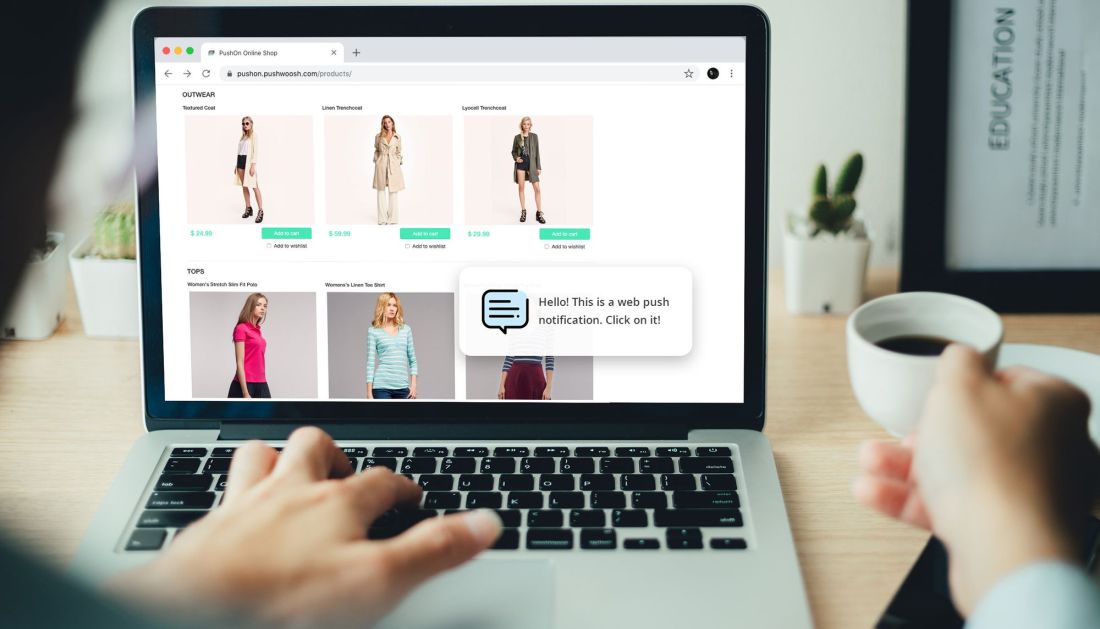
The clickable or actionable pop-up messages and the promotional material that you encounter daily on your browser or mobile phone screen are known as browser push notifications or simply push notifications.

Unlike the in-app notifications that are delivered by mobile apps, these notifications are automated communication messages delivered by the websites/apps directly to their users as home screen notifications.

Usually, these notifications contain a URL, a message, and an image with a title. Nowadays, push services are tailored and customized as per individual users and the devices they use.

Push notifications provide updates, information, reminders, and much more. The aim of these services is the engagement of their users with the respective apps.

Different Types of Push Notifications

Push notifications can be used in multiple ways and it’s very easy to integrate them in your business flow.

Here are a few of the best examples to use them in a very productive way.

#1. Cart Abandonment Campaigns

All e-commerce apps utilize eCommerce push notifications to re-engage customers who have abandoned their carts in the midst of a shopping spree. On average, carts are abandoned almost 70% of the time!

Using cart abandonment campaigns the right way can increase an app’s revenue by up to 15%.

An e-commerce app looking to attract a customer with an abandoned cart would deliver notifications along the lines of:

“You found a great deal on XYZ! Order it now before prices go up.”

#2. Promotional

Promotional push notifications apprise the users about giveaways, sales, and exclusive offers. These notifications encourage users to make purchases.

These can be used in apps of all kinds – from shopping apps to fitness apps.

For example, Kohl’s app offers discounts by pushing the following notification:

“Will you get 40%, 30%, or 20% off? Check the App to reveal your mystery savings.”

#3. Re-engagement

Re-engagement notifications are an enticing way of grabbing a user’s attention. These notifications are designed to make the user open the app.

For instance, Yelp engages its customers using the following notification:

“Hi Justina, here is a brunch spot for your Thinking Cup. Click here to take a look.”

The notification has a picture. Push notifications that include a picture are opened 56% more than notifications with only text.

It also has an emoji. Using emojis in push notifications improves notification open rate by 85%!

#4. Announcements

Push notifications with announcements are a super-effective way of engaging the user. A marketing study concludes that push notifications are most effective in the afternoons, Tuesday through Friday.

You can send the users notifications announcing new app features, new products from your company, or announcing the winners of a contest.

The StyleRyde app informs the user about a new feature using this notification:

“Sara – Now you can schedule StyleRyde pickups right from your smartwatch.”

How to Ideally Use Push Notifications for Business?

Although online push notifications seem an easy method to push your content easily, here are a few of the guidelines that you must follow to get most out of your push notification campaigns.

#1. Create Genuine Content

Nicely crafted content targeted towards the right audience is the key. Open-ended and persuasive content is preferable to the close-ended one. The user must find some benefit in the material.

The content message needs to be crisp and clear that it can engage and hook the user with a call to action.

Also, as Amazon and other e-commerce websites do, create some urgency with a hidden message that hits the psyche of the user’s “fear of losing and missing the opportunity” bias.

#2. Combine with E-mail Marketing Strategy

Clubbing the push messages with your e-mail marketing strategy can expand your reach to a broader audience.

As soon as someone subscribes to your email database, you can send them some push notifications to teach them about your product or services.

By using this technique, you can have them subscribed at both the platform and you can get in touch with them easily.

#3. Social Media

Engaging the audience on social media platforms such as Twitter, Facebook, Instagram, Pinterest, and others further increases your reach.

You can create a page with your embedded link of notification or add it to your profile to do so.

Also, adding testimonials of your services or products by earlier users is a great way to enhance word of mouth.

#4. Right Notifications

You can usethe A/B testing method to figure out the best promotional strategies for your business that can engage your targeted users more.

Such testing methods provide data to create plans for maximum conversions.

#5. Segmented Campaigns

Segmented campaigns are more effective when compared to broadcast campaigns. Thepush notification statistics reveal that they increased from 65% in 2015 to 85% in 2017 and still growing. They are more effective as they narrow down essential filters for your target audience.

You can segment your notification campaign based on geographic location, demographics, market or industry, past web and e-mail activities, buyer’s personality, workflow activity, and many other ways.

#6. Easy Opt-in Process

Users always welcome and prefer permission-based notifications. Therefore, while the opt-in option is critical, so is the opt-out option too. The user wants the freedom of choice.

Again,  A/B testing can be utilized to find the best suitable way for your method.

Using Web Push Notifications to Grow your eCommerce Store

Setting up an eCommerce store on Shopify is simple. There are several resources available to walk you through setting up a navigable and sleek storefront. But, successfully growing your Shopify store is another ballgame.

Some of the biggest stores have a robust set of marketing channels – email, SMS, and social media, to name a few – to ensure they are maximizing their reach and bringing in more engagement. But just bringing in new visitors doesn’t cut it – you also need to be able to retain and retarget these store visitors.

That’s where push notifications for Shopify can make your engagement efforts much more impactful.

Step 1: Grow your Subscriber List

increase-push-notifications-subscribers

The first step to setting up push notifications is to build your subscriber list.

When you first enable any push notification app, the app adds the browser prompt to your store by default. The browser prompt is a permission window that is displayed to your store visitors when they visit your site. Here’s what it looks like:

Since browser prompts are native to each browser, they are not customizable. This means that you have little control over what is displayed to your visitor. But, within the PushOwl app, you can add customizations based on your brand voice and preferences.

For instance, you can set a delay so that the browser prompt isn’t shown as soon as the visitor lands on your store. This delay allows your visitors to spend a few minutes browsing your store and in turn, makes it more likely that they would opt into your push notifications instead of hastily dismissing it.

Step 2: Set up Automation

Before you start sending promotions, you can set up some powerful automation that will trigger notifications based on customer activity.

1. Welcome Notification

Welcome-notification-Cat-and-fiddle

First impressions leave a lasting impact. So, as soon as your store visitor subscribes, it’s important that you greet them with a welcome notification that is automatically triggered. Many stores use this welcome notification to greet their new subscriber with a fun message while other stores provide their subscribers with a discount code for their next order.

2. Abandoned Cart Reminders

cart-abandonment-notification-templates-4

Recovering your abandoned carts is a crucial part of store ownership. Just like email, push notifications allow you to set up re-targeting to engage shoppers who have abandoned their cart. With push notifications, you can set up a sequence of 3 reminders at different intervals to have a chance to bring your shoppers back and recover your carts easily.

One of the most common tactics used by merchants is to provide a discount code or free shipping on the shopper’s cart with the second or third reminder.

3. Flow

Ever wanted to send shoppers messages that are triggered based on their activity on your store? With Shopify Flow, you can easily set up automated push notifications based on different behaviors- from providing a loyalty discount for purchasing from you to sending a message notifying them about their order confirmation, delivery, and even return.

With Flow, you need to set up your preferred workflows once, and your customers can stay informed about their orders and any special discounts as you process it in the backend.

Step 3: Convert Subscribers with Attractive Promotions

Building your subscriber list is easy once you’ve set up your widgets.

According to a statistic, 5 to 15% of your store visitors are likely to opt-in to your push notifications.

Once your subscriber list starts growing, it’s time to send push campaigns to these subscribers to bring them back to your store and convert them into customers.

1. Flash Sale

flashsale

There’s no doubt about it – shoppers love flash sales! Campaigns with an expiry date create urgency in your shoppers and make them check out faster so that they don’t miss the deal. Many stores run weekend sales and use the Flash Sale feature to send out push notifications with an expiry date.

Add the discount code and the expiry time in the title copy. With flash sales, stores don’t have to explain too much about the sale since the title and the message create enough urgency to persuade subscribers to make a purchase.

2. Event Promotion

Campaigns that get the best traction are ones that are relevant and timely. This is why a notification promoting your store’s Christmas sale or a Black Friday sale gets more clicks and revenue than a regular old campaign.

Make the most of this attention by sending out timely campaigns based on these events. Some stores even run campaigns during fun holidays and events, like No Shave November or Fashion Week.

3. Product Engagement

Whether you’re launching your new product or promoting an existing product, sending a push notification with an attractive hero image and a catchy caption is bound to make your subscribers more intrigued about your product, prompting them to get it for themselves.

Use the title and message to paint an attractive picture of your product. You can even talk about the benefits of the product and what your subscribers will gain from owning it.

4. Product Advice

What unique quality or benefits do your products have? Do they have multiple functionalities? Or can you use the product with something else for a quick beauty hack? Promote these hacks with your subscriber base.

Sending out push notifications with exclusive tips can make your subscribers eager to receive your notifications and they are more likely to come back to your store. Even if they don’t purchase the product you’ve mentioned in the notification, you can expect them to browse the rest of the store and make a purchase while they’re at it.

How to Choose a Marketing Automation Tool in 2020

If you’re new to marketing automation, choosing the best marketing automation tools for your eCommerce could be an overwhelming and intimidating process. Long gone are the days when your decision was limited to the top ten leading tools out there.

To help you navigate this extremely crowded landscape and design your marketing strategy, we put together this practical guide on selecting the right marketing automation software for your online business.

The Importance of Implementing an Effective Marketing Automation Strategy

Some of the benefits of a well-implemented marketing automation strategy for your business include:

  • Reduced customer acquisition and staffing costs.
  • Better return on investment (ROI) — increase in revenue and average order size.
  • Time savings
  • Improved targeting of messaging.
  • Increase in qualified leads generated by the marketing campaigns.

Example Uses of Automation in Digital Marketing Campaigns

There is a myriad of ways that marketing automation enables you to be more effective and produce a higher ROI on your efforts.

  • Use cross-channel messages to target potential customers. Some people are more likely to engage with your brand on social media versus email. Marketing automation tools allow you to have an effective customer communication across different channels.
  • Run precise A/B test experiments. With marketing automation tools, you can easily measure which campaign yields the best result and double down on it.
  • Boost your email marketing engagement by sending follow-up emails to unengaged subscribers.
  • Increase customer lifetime value through up-sells and cross-sells with relevant products personalized for each recipient.
  • Revive old leads with re-engagement campaigns.
  • Streamline your sales processes and align marketing and sales team more effectively with the use of all-in-one marketing automation systems that provide you with access to marketing tools and CRM features.
  • Schedule social media posts and campaigns ahead of time

How to Select the Right Marketing Automation Tool

Marketing automation is so ubiquitous today that you’re probably using at least one marketing automation tool already without calling it like that. With so many tools available, it might be hard to decide what exactly do you need.

To help you with that process, we’ve put ten easy tips.

1. Start with your business model

Your business model and processes are greatly going to impact your marketing automation needs. Do you run a B2C or B2B business? Is your business software as a service (SaaS), a mobile app, eCommerce, marketplace, or a service? What does your selling process look like — do you rely on a product-led, self-serve onboarding or you have a traditional high-touch sales model?

There isn’t a single perfect solution that caters to all types of businesses. By understanding your business model, your acquisition processes, and your customer persona, you can make more knowledgeable decisions when selecting your marketing automation toolset.

2. Identify the stage of your business that needs the most attention

Based on the business model and maturity of your company, you may experience challenges at different stages of your marketing funnel. Do you have difficulties attracting traffic to your website? Do you manage to convert that traffic to qualified leads and those leads to customers? What is your average customer lifetime value, and for how long do you retain your customers?

If you struggle with attracting eyeballs to your product or service, you might need to look into a search engine optimization (SEO) platform like Ahrefs or MOZ to help you increase your organic traffic. Maybe you’d want to boost your social media presence and engage better your loyal audience by scheduling regular posts on Facebook, Twitter, and Instagram with tools like Buffer, Hootsuite, and CoSchedule.

To convert that website traffic to leads, you could A/b test different landing pages and forms with a robust landing page builder tool like Leadpages or Unbounce.

3. All-in-one Vs. best-of-breed marketing automation platforms

Marketing automation platforms come in two general forms: all-in-one suites or best-of-breed tools.

Which one you decide to go with depends on your personal preference, your marketing needs, and your budget.

Best-of-breed tools focus on providing the most robust and sophisticated solutions to a single feature or set of features. For example, Mailchimp helps you with email marketing automation, Buffer with social media, and Ahrefs with improving your search rankings.

There’s a third category of marketing automation products that help you orchestrate and automate tasks between other tools: Zapier, Autopilot, and Encharge.io are a few of them.

4. Consider your budget

Last but not least, you need to consider your monthly budget allowance for marketing automation software. Using the right set of tools is crucial, but what makes a good tool great is the marketer using it. That’s why you need to carefully decide how much you want to spend on these products.

Big platforms like HubSpot, Eloqua, and Market tend to get extremely expensive if you use their full set of features. Fortunately, most of them offer their suite as separate products, so you can subscribe only to the features that you need.

Best-in-class software products like Buffer, Leadpages, SEMrush, etc. are usually most cost-effective, but you might need to use a few of them to cover all of your marketing needs.