5 SMS Marketing Ideas to Generate More Sales

SMS marketing is a great way to interact with consumers, especially when 95% of adults in the US own a mobile phone.

Not convinced yet? Look at these SMS statistics:

  • 82% of people keep notifications turned on for SMS messages
  • 95% of texts from businesses are read within 3 minutes of being sent
  • The average response time for a text message is 6,000% (60X) faster than email
  • The average SMS campaign conversion rate is 45%

But once you have the phone numbers of your target consumers and then what will you send to them?

In-depth Guide on SMS Marketing for Ecommerce (FREE)

You need to constantly deliver value, and give them a reason to engage with your text messages.

That’s why I’m sharing 5 SMS marketing ideas for eCommerce to generate more sales.

5 SMS marketing ideas to generate more sales

1. Ask for Permission

Asking for customers’ permission isn’t mandatory, but it’s good for you. Instead of creating SMS marketing campaigns that customers never read, you’ll need to spend time nurturing relationships with customers who want to receive notifications.

You can get this permission in 2 ways:

  1. Create a campaign by asking consumers to text an opt-in keyword to a short code, for example, “Text YES to 12345 to receive exclusive promotions!”
  2. Ask customers to check an opt-in box — similar to opting in to receive a newsletter — when they check out, request information, or sign up for another service on your website.

ask-for-permissions

Include the following 3 sections when you send text messages to your target customers:

  • Expectations. Tell customers about how frequently you plan to send text messages and what kind of content will they receive.
  • Opt-out option. Make sure that it’s always clear how your customers can stop receiving text marketing messages from you.
  • Call to action (CTA). Each text message should include a brief message with a clear CTA that encourages customers to act. For example, “Click here to confirm subscription.”

2. Personalize Your Messages

SMS marketing gives you a unique opportunity to personalize text messaging and connect with customers one-on-one via SMS. Make sure that your recipients feel like a special contact, not just another one on a mailing list. Customers prefer to receive personalized messages and are more likely to move through the sales funnel when they do.

3 ways to incorporate personalized SMS marketing campaigns:

  • Include the customer name in text messages
  • Mention customer activity — like a recent purchase, or a shipping update

personalize-your-text

Take your personalization further and segment your customer list so that only certain customers receive highly relevant messages. For example, you could send discounts exclusively to customers who purchased from a group of products, like sneakers. Or to customers who bought a specific product, like black-striped shoes.

3. Make the Value Clear

Just sending a text message isn’t enough. If you want your customers to take action on your SMS they must see value in your message — either in information you are giving or in the offer they receive.

To create SMS campaigns that your customers will engage with, try:

  • Creating discount coupons and offers unique to your SMS marketing list
  • Targeting offers based on customer segments and behaviors

make-value-clear

4. Integrate Rich Media into Your SMS Marketing Campaigns

Mobile messaging includes more than just plain text. It’s now possible to get higher engagement rates of text messaging by providing customers with the experience of an app or email campaign. By using SMS marketing tools, you can set up mobile landing pages with all the features of an email or web page and integrate them into your SMS marketing campaigns.

The following is an example showing a survey shared using rich media.

include-rich-media

Rich media text messages can also be used to share appointment scheduling and payment processing.

5. Lead with Your Offer

With only 160 characters to get your customers’ attention, make sure the most interesting part of the message, your stellar offer, sits upfront.

Text messages don’t have subject lines, so by including your offer to the top of the message, customers quickly see the selling point. Even before they open the message, customers can see the offer when previewing the first few words of the message on their phone.

sms-marketing-offers

Over 90% of text messages are opened within 3 minutes of being received. Don’t waste the opportunity to convert customers by burying the offer below lots of text.

Among recipients of SMS marketing campaigns:

How to leverage SMS Marketing across the customer lifecycle

With 98% read rates and 5x the response rates (vs email), SMS serves as an effective customer engagement channel for small and large businesses across different industries. While many businesses use SMS Marketing in one of the customer lifecycle stages (e.g. either to generate leads or to seek feedback), only a few manage to optimize SMS communications throughout the lifecycle.

Today, we’ll be discussing different stages of the customer lifecycle and how you can grow your business by leveraging powerful SMS marketing at each stage.

In-depth Guide on SMS Marketing for Ecommerce (FREE)

How to Do SMS Marketing Right: 10 Tips for Successful Text Campaigns

The effectiveness of SMS marketing is indisputable.

Texting has the highest engagement rate of any marketing medium by far at 82% open rates.  90% of messages are read within three minutes of receipt.

And most powerful of all?

Your customers want you to use this channel. Over half of all consumers say they prefer to contact support via SMS over all other channels. And most say they prefer to get order status alerts, reservation confirmations, and appointment reminders via text.2

So — how to do SMS marketing effectively? We’ll cover the essentials of text message marketing, including best practices and examples from leading brands, to help you use this channel to engage and convert more customers.

What is SMS Marketing?

Let’s start with a simple SMS marketing definition.

SMS stands for “short message service.” These messages can be sent between phones or from a computer to a mobile device. SMS marketing involves sending marketing messages to customers via text messages.

Some of the best SMS marketing campaigns to help inform your strategy are explained below

1. Get Permission & Make Opt-out Clear

You must have permission to send users text messages. Otherwise, you’re just spamming people, which can mean irreparable damage to your brand. Not to mention breaking the law and potentially racking up significant legal fees.

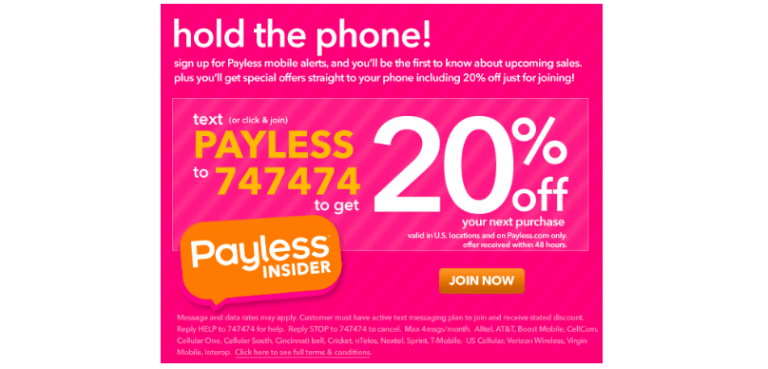
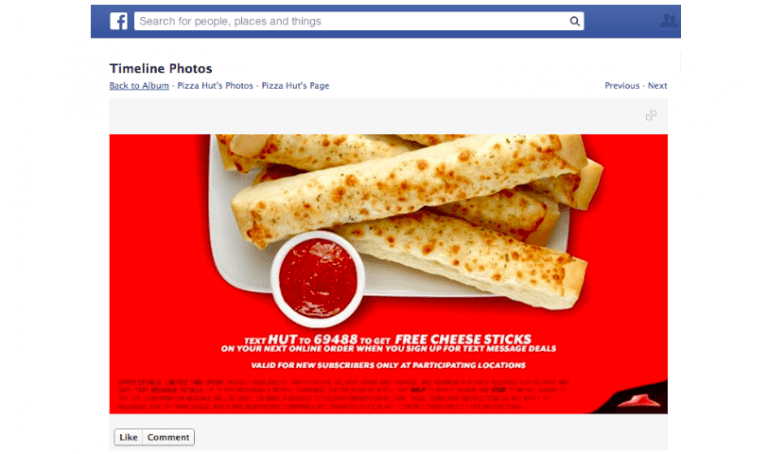
Get subscribers to opt into text messaging with promotional campaigns that ask them to send a keyword to your shortcode. Or let them check a box during the checkout process alongside email subscriptions. And to encourage opt-ins, be clear about what subscribers can expect. What types of messages will they receive and how often?

For example, “Text ‘SAVINGS’ to 12345 to receive weekly coupons.” The shortcode serves as the phone number customers text the keyword to. The keyword goes in the body of the message to signify which SMS campaign they’re signing up for.

You can encourage signups on any of your current marketing channels: email, website, in-store, social media, direct mail. For example, Payless prints flyers and posts signs near the store checkout, and Pizza Hut spreads the word on Facebook.

text1

text 2

2. Know the Rules

The Cellular Telecommunications Industry Association (CTIA) requires SMS marketers to include “msg & data rates apply” in auto-reply messages. Most text marketing services will add this disclaimer automatically, but it’s on you to ensure it’s included.

3. Less is More

How many SMS is too many?

Upland Software’s in-depth analysis of ideal SMS frequency recommends starting with 4-5 messages a month and slowly increasing to 10 a month — as long each message provides real value. Of course, you should closely monitor unsubscribes for an uptick in churn to find the sweet spot for your own subscribers.

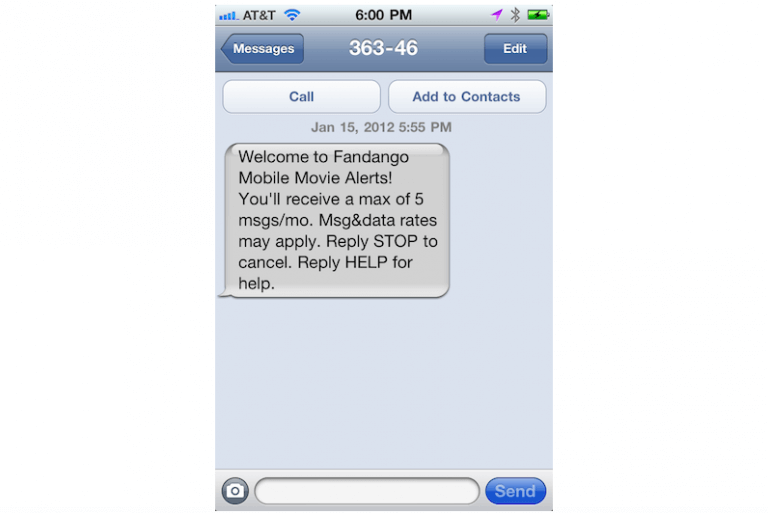
It’s also a good idea to include frequency in your welcome message so users know how often they’ll hear from you:

text3

When it comes to message length, think short and sweet. Most carriers limit text message length to 160 characters, so the faster you get to the meat of your message the better. State value upfront, include a crystal clear call to action and use a URL shortener like goo.gl or bit.ly.

4. Timing Matters

When it comes to timing your text messages, think about your audience’s daily habits. When are they most likely to be on their phones?

According to Mobile Marketer, Mondays have the lowest response rates. Unless your message is specifically relevant to that day, avoid it.

You should also steer clear of common commute times, typically 6:30-8:30 am and 4-7 pm, when people are likely driving and unable to read or respond to texts.

In general, standard business hours of 10 am – 8 pm are most effective for SMS marketers. Just be sure to localize send times for your user’s specific time zone. No one wants a coupon code or appointment reminder at 4 am.

5. Keep it Fun!

SMS is a highly personal and informal channel, making it ideal for entertaining campaigns. Think games, promotions, polls, interactive content, and one-on-one conversations. Use it as an opportunity to deliver fun, memorable customer experiences.

Note: many SMS marketers use shortened to text speak like “ur” and “txt” in campaign copy. Feel free to do the same, as long as your message is easily readable.

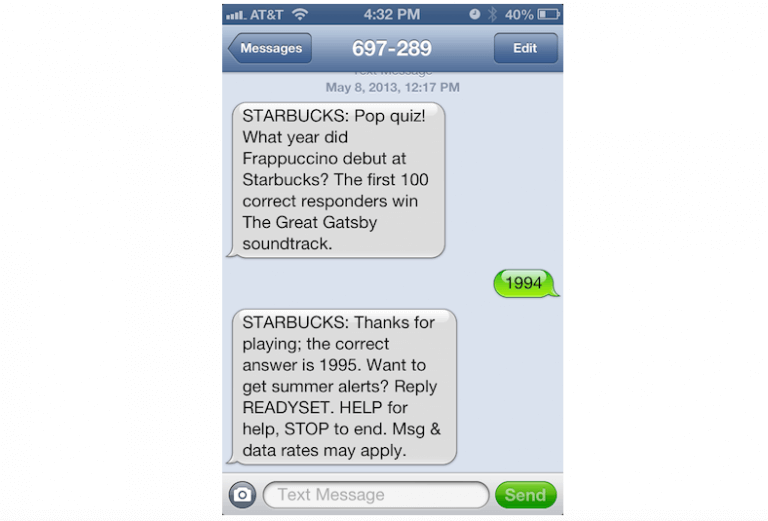
Starbucks has long used SMS to delight customers with trivia games, quirky memes, and personalized rewards. This campaign from 2013 takes advantage of the immediacy of SMS by rewarding the first 100 correct responders. And it cleverly reinforces the essential role music plays in their customer experience.

text4

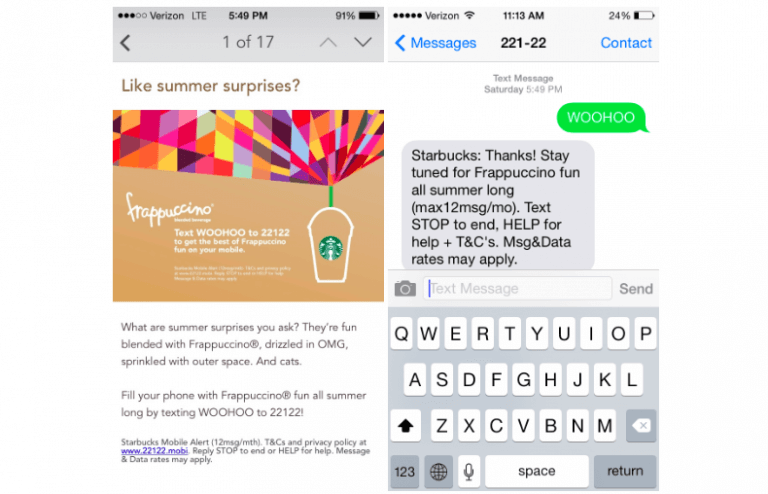
This recent campaign pairs the informal nature of SMS with summertime fun, featuring intergalactic cat gifs, silly “Pew Pew!”s, and OMGs. And it delivers real value with 50% off coupons and extended happy hours for subscribers.

text5


6. Segment

You wouldn’t talk to a brand new visitor the same way you would a loyal customer. The same goes for SMS. Segment your audience to ensure that each user gets relevant, valuable content.

New visitors could get free shipping or promo code, while repeat customers get early access to new products or an invite to your rewards program.

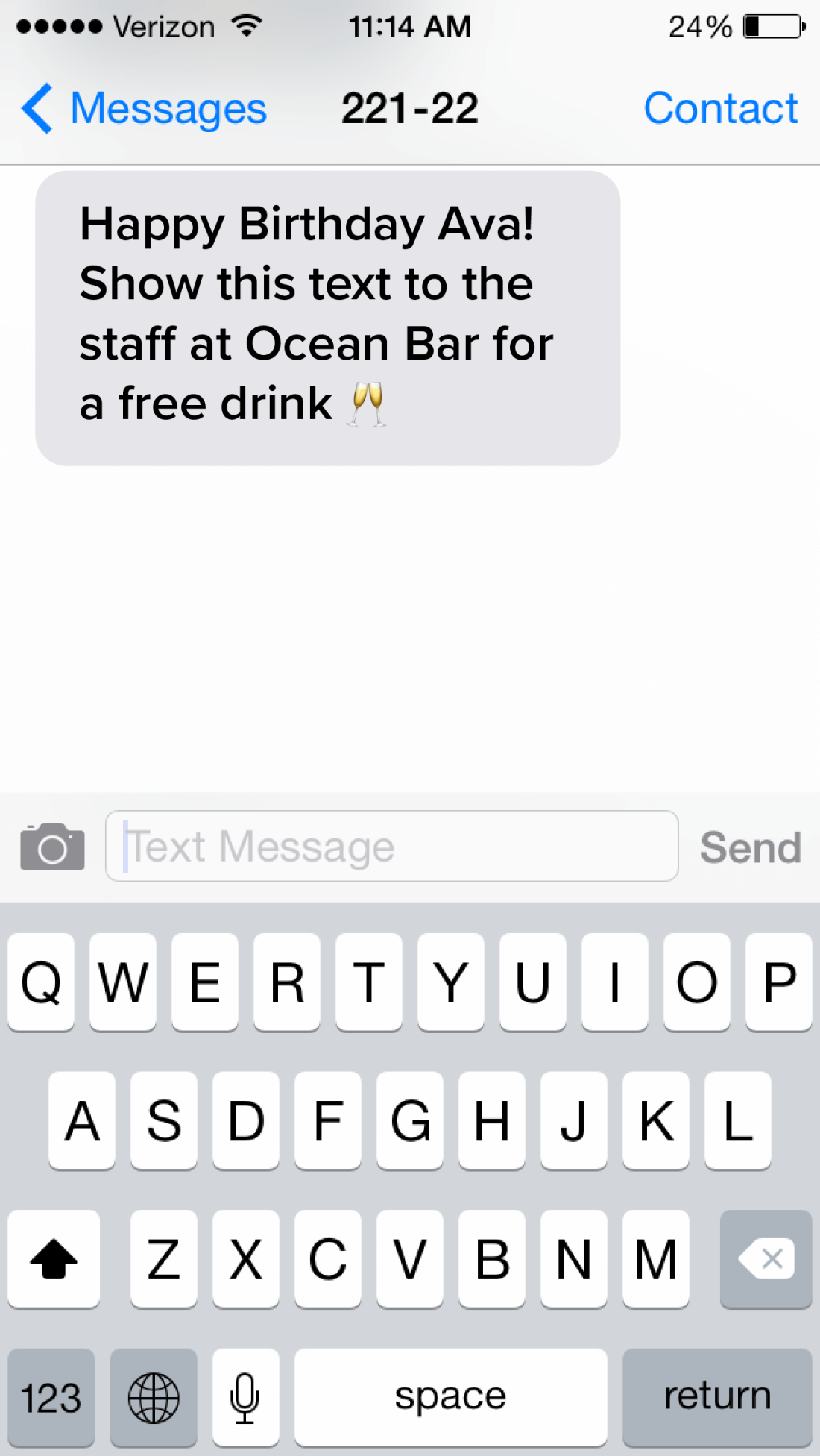
Use profile data to send birthday promotions, new customer discounts, or location-based campaigns to give each user a personalized experience and up conversions.

text7

7. Instill Urgency

One of the central benefits of SMS is immediacy. So use that to your advantage.

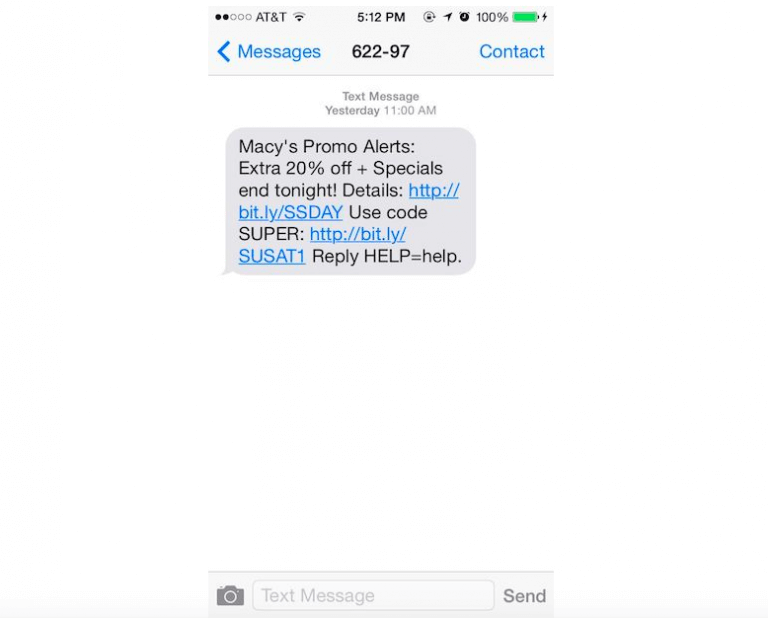
Pair SMS with location-based campaigns to send tempting promotions to users when they arrive or pass by your store. Include phrases like “valid till,” “expires soon,” or “today only” in your message copy to create a sense of urgency and prompt recipients to act.

text8

8. Make It Exclusive

One way to keep subscribers from opting out of your SMS campaigns? Send exclusive offers or VIP content they won’t get on any other channel.

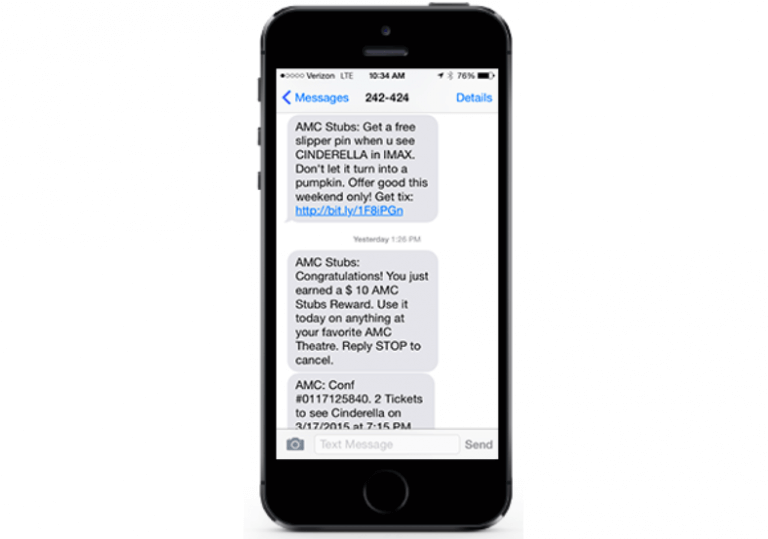
AMC Theaters uses SMS to keep its Stubs club members up to date on their rewards points and membership benefits. Subscribers get access to free movie screenings, special event invites concession discounts and movie swag giveaways.

text9

9. Track Open & Click Rates

As with any other medium, you should track how users are engaging with your text campaigns. How many open your message? How many clicks the link or send a response? How many opt-out?

According to the current SMS marketing industry benchmarks, 70% of customers open SMS messages within 60 minutes. 19% of recipients click on a link.

Like any other channel, you should A/B test messaging, audiences, and timing to keep improving your SMS marketing strategy.

10. Use SMS as Part of an Omnichannel Strategy

Today’s mobile users demand a consistent customer experience regardless of channel or device. An omnichannel strategy is essential to building a strong, lasting relationship with your brand.

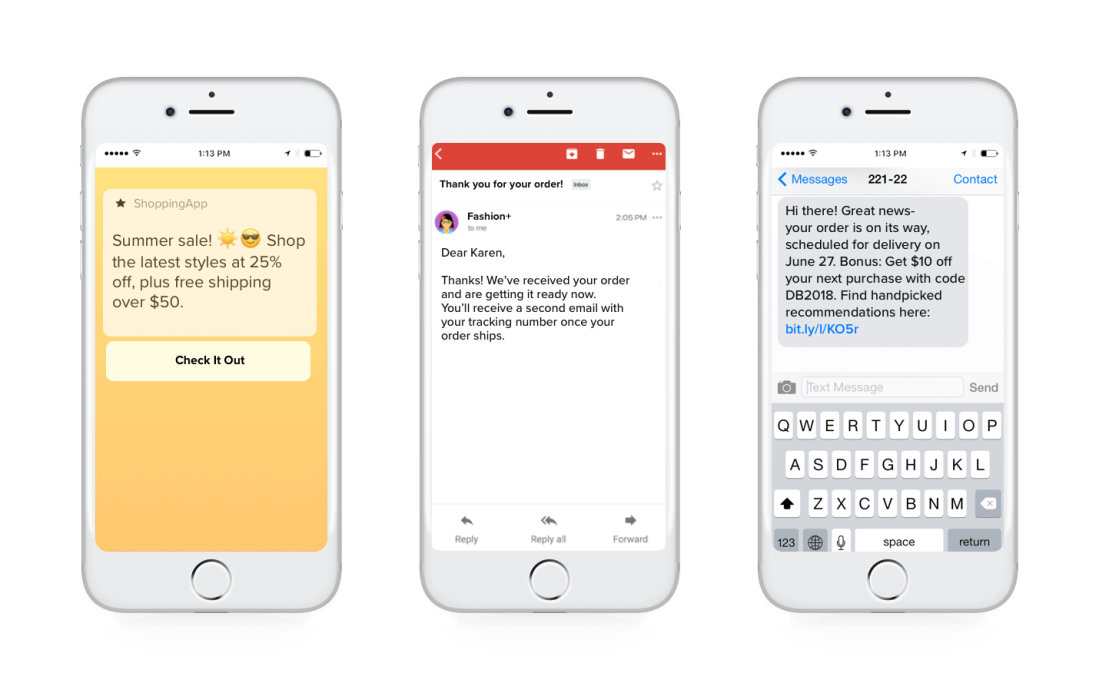
Your SMS campaigns shouldn’t be one-offs. They should complement and connect with your push, email, and social campaigns to reinforce customer relationships and provide a seamless experience.text10