5 Marketing Personalization Tips to Win Over Customers

Picture this: You’re digging through your mailbox and find a bunch of flyers and advertisements that everyone receives – boring. But in the midst of the pile, you notice a company has sent you a personalized message. The company has addressed you by name and seems to know exactly what you’re looking for; it’s like they read your mind. Which one are you going to read, and which ones will end up in the trash?

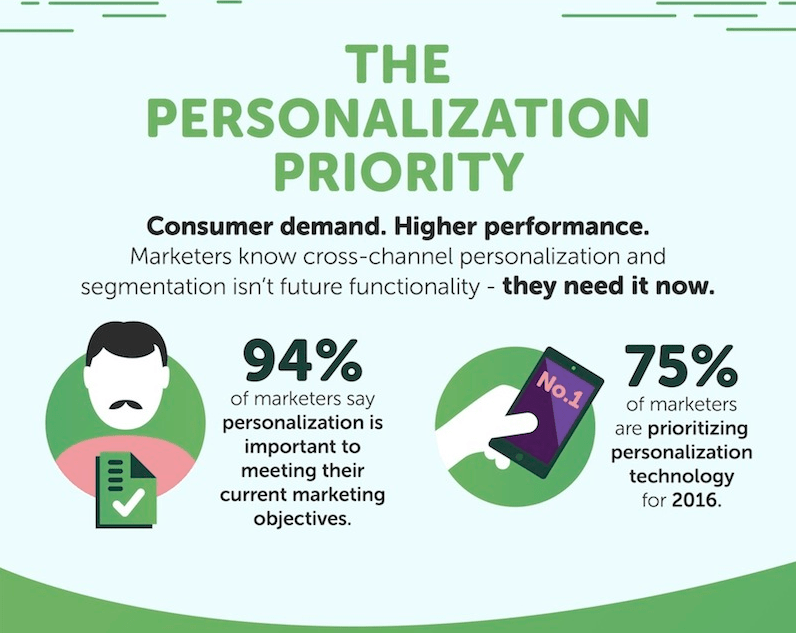
You can’t win over customers with broad, impersonal marketing messages anymore. Customers today want and expect more than that. Personalizing your marketing is what will create a positive experience for customers, an association with your brand of trust and value, and keep you relevant in consumers’ minds. In fact, 33 percent of marketers said that personalization will be the most important marketing capability in the future.  

But how do you wow your customers with personalization? Here are five personalization marketing tips to impress customers.

1. Use the customer’s name.

When you’re walking down a busy street and hear your name being called from behind you, what do you do? You turn around and look, of course. Using the customer’s name in marketing has the same effect. In a crowded inbox, consumers are much more likely to pay attention to an email with their name in the subject line. In fact, emails with personalized subject lines are 26 percent more likely to be opened.

Using the names of your customers in your email marketing is also one of the fastest ways to build rapport. Your customers will appreciate receiving emails from you when they feel like you are speaking directly to them. So instead of sending out emails addressed “Dear Valued Customer,” send out a message that opens with “Hey, Joanna! We’ve missed you!” Your customers will not only take notice, but they’ll also feel more connected to your brand and more receptive to your message.

2. Personalize your site’s popups.

Displaying popups on your site can be a really effective way to catch the attention of users and convince them to take your desired action, whether that’s subscribing to your email list or making a purchase, but popups are much more effective when they’re relevant and personalized. If your popups aren’t personalized or don’t relate to what your website visitors are actually interested in, you risk annoying them and won’t see any improvement in conversions.

Personalize your popups for higher conversions by ensuring your popup offer is relevant to the content visitors are already enjoying on your site. For instance, if you offer to coach for Pinterest marketing and Instagram marketing, and a user is only reading your Pinterest marketing content, would a popup that offers an Instagram e-book download interest them? Probably not. Your popup should offer them a chance to download your Pinterest Checklist PDF instead; this way, you are offering them what they want and they’ll be more likely to act.

3. Segment your email list.

Each of your customers and subscribers is unique, with different wants and needs, so why would you send them all the exact same email? Segmenting your email list is essential to getting the results you want from your email marketing campaign. It will allow you to send more personalized emails to users, giving them exactly what they want and need, so you can drastically increase sales.

For example, if you’re a clothing retailer, would you send the male subscribers on your list an email with the latest women’s fashions? You could, but that would be a waste of time. Instead, segment your list based on gender, interests and other demographics to ensure you send emails to shoppers who will be excited to receive them. An email marketing service like Mailchimp will let you easily segment your email list and even includes ready-made segments so you can start personalizing your campaigns right away.

Another great perk of segmenting your email list is recapturing the attention of inactive users. If you segment your list based on people who haven’t visited your site in a while, haven’t bought anything for some time or haven’t used your product lately, you can send them a personalized message to tell them you miss them. This is a fantastic way to reduce customer churn and reinvest users you may have otherwise lost forever in your brand.

4. Send customers personal reports.

Sending out personalized reports is a great way for companies to impress their customers. Reading an email from a company you love, catered specifically to you, is satisfying for a consumer. This tactic is especially effective for SaaS companies; these companies can email personal reports to users that outline their success with the service, including a breakdown of their stats. For example, Grammarly sends its users stats on how many words they typed each week and how productive they were compared to other users.

Even if you’re not a SaaS business, you can still take advantage of personalized reports. For instance, if you’re an e-commerce business, you could send an email to customers about their latest order and recommend new products based on what they purchased. Customers will love the personalized touch and look forward to your valuable insights.

5. Reward loyal customers.

Did you know it costs five times as much to attract a new customer as to keep an existing one? That’s why it’s so important to keep your most loyal customers happy with personalized marketing messages and offers. By analyzing your website data, you can easily see which of your customers are most valuable to your business, which of them buy most often and how much they spend on average. These are the customers you want to really want to impress.

To keep your favorite customers satisfied, you can send them targeted promotions and offer them special discounts to let them know they are valued and encourage them to continue buying from you. If you don’t want to give discounts, you can also show your appreciation by offering your biggest fans early access to a new feature or extra content not available on your website.

A personal touch plays a huge part in winning people over. With these marketing personalization practices, you can position yourself as a devoted company that goes above and beyond for its customers. Start implementing these tips to get better results from your marketing efforts, including a huge boost in sales.

7 ways to Segment your Target Audience for effective eCommerce Personalization

As defined by Smart Insights, segmentation shows approaches to grouping prospects and customers to deliver more relevant communications and offers. The result is to give better response rates to these communications.

personalization

In the marketing arena, personalization is a term often misused for segmentation. Personalization and segmentation, while both valuable tools for marketers, couldn’t be more different.

Key benefits to Segmentation

There are five key benefits to having a good customer segmentation when looking to improve your customer’s online experience through personalization

  1. Better match of your product or service offering to your customer’s segment needs. Creating tailor-made marketing initiatives
  2. Improve the product or services offered. Businesses can use market segmentation to identify what does work but more importantly what doesn’t work and alter accordingly
  3. Enable businesses to retain more customers by offering products that appeal to where customers are in their stage of life
  4. Allow a business to grow by upselling on customers who have responded to introductory offers
  5. Enhance business profits by targeting customers who have a propensity to have more disposable income by raising their average selling price

Segment your Target Audience for effective eCommerce Personalization

1. Segmentation by referrer or traffic source

This means where the place where your visitor was prior to landing on your website. An AI-based personalization system can learn which offers work best for visitors from different sites, whether referral sites, social media, direct or from paid link ads.

2. Visitor type

For example, new visitors or returning visitors can be identified in analytics and in personalization systems. This is a commonly used technique for personalization, for example, offering new visitors a discount on the first purchase or creating welcoming rewards for repeat purchasers.

3. Customer information

Customer segments can be either profile based or behavior-based. Behavior-based segments are based on, for example, what users have searched for on current and previous visits or purchase behavior. Profile-based segments are based on what kind of customer they are to the business, for example, VIP, infrequent visitors, first-time visitors. This segmentation allows businesses to upsell, cross-sell and incentivize to buy again.

4. Site engagement duration or times

Examples of this are browsing time or number of pages viewed. In some circumstances, it may be best to deliver personalization to visitors who have engaged with the site for a certain length of time. Audience behavior can also vary based on the day of week or time of day, so audiences visiting at different times can be targeted differently.

5. Content (products) viewed

This is the most common segmentation technique used in retail personalization, based on product categories or individual products viewed. Related products of a similar style can be shown. Given a large number of products (SKUs) many retailers hold, some form of automation rather than a rules-based system is required here.

6. Landing page

This is a slightly different form of content-based segmentation based on where the visitor first arrived on the site, which suggests their initial intent.

7. Event or interaction

Common interactions on an e-commerce site are people who click on add to basket, cart or interact with product information. These can be selectors for product variants such as color or size or reviews. The value in the cart can also be referenced.


8 Technology Trends Enabling the Future of Personalized Customer Journeys (2020)

According to Frost & Sullivan, customer experience will become the key brand differentiator by 2020, edging out both price and product. This means eCommerce personalization is here to stay, and brands who can’t connect with the customer to create satisfying experiences will struggle to remain competitive.

Markets are increasingly becoming saturated with similar, high-quality products at slightly varying price points. It’s no longer enough to offer the cheapest goods or even the best product. Paying attention to how customers interact with your brand both before, during, and after the buying process is critical for a winning strategy.

So how can digital marketers create a highly interactive and satisfactory customer experience for their brands? The answer lies in leveraging the best technologies to build immersive, personalized customer journeys across every channel. 

5 Technologies That Are Shaping Personalized Customer Journeys

These eight technology trends enable brands to provide the ultimate personalized experience for the customer.

1. Web Content Management Platforms Facilitate Personalization

“The democratization of capabilities has provided greater agility for marketers and enabled WCM to be formally regarded as key to delivering engaging digital experiences to multiple audiences.” – Mick MacComascaigh and Jim Murphy, Gartner authors

Web content management (WCM) platforms are evolving as the need for personalization influences the software capabilities brands need to implement their customer engagement strategy. Almost all WCMs can automate metadata to optimize content categorization. 

Compared to manually categorizing content, which can be ineffective and inaccurate, automating this process closes the gap created when using drop-down lists for tagging, for instance.

2. Augmented Reality Provides an Engaging In-Store Experience

Consumers no longer need to go to a physical location to purchase a product. Retailers today are considering this by using AR technology to provide an immersive experience outside of the store.

This is a key strategy for the future of retail as 71% of consumers say they would shop more frequently at a store that offers augmented reality and 40% would pay more for a product if they can experience it through AR.

Brands like Lacoste are already using AR apps so that customers can try items of clothing through the app to experience how they would look and feel. Other examples of AR technology include in-store AR mirrors that show you wearing a piece of clothing and signage around stores that can connect to your cellphone to pull up reviews of a product.

3. Voice Interactions to Add to the Audiovisual Experience

According to a survey of 500 IT decision-makers, 88% believe that voice technology would give them a competitive advantage when it comes to enhancing the customer experience. 

As voice technology becomes more and more functional and engaging, customers won’t think twice about interacting orally with brands through apps. The Starbucks barista app––which allows users to speak orders into their phones––is a prime example of consumer-facing voice technology.

4. Smart Cars Bring the Brand to the Driver

Cars today are no longer pieces of assembled hardware. They are built around sophisticated software that brands can utilize to create an on-the-road experience for customers. 

For example, General Motors cars come with a featured called Marketplace on the car screen, through which drivers can place orders from brands like Starbucks or Dunkin’ Donuts. The technology offers consumers both convenience and experience that comes to them, rather than the other way around.

5. Artificial Intelligence Suggests Relevant Data to Customers

AI and machine learning are the difference between a brand that stops at personalizing emails by using the customer name and one that can give customers exactly what they want by offering relevant information.

Perhaps the most powerful example of a brand that uses this technology for maximum advantage is Amazon, which reportedly drives 35% of its sales through its recommendations feature. Artificial intelligence can determine customer behavior by mining through the troves of data generated by their browsing and purchase histories. Machine learning continues to improve this process by using new data to narrow down the customer profile further.

Create Personalized Customer Journeys That Don’t Sacrifice Your Content

The technology certainly exists to enhance brand experiences for customers. But implementing that technology without sacrificing the heart of the experience—your content—will be a tough task if you don’t have a modern, flexible content management system (CMS), such as a headless CMS, in place.

Not only will a headless CMS organize all your cross-channel content in one place, but it can also help you create more engaging personalized customer journeys.

14 Credible Ways To Use Wigzo Web Push Notifications (and what not to do!)

We can’t help but emphasize the importance of using web push notifications to improve customer engagement and retention rate of your business. In the last 6 years, there’s been a spike in the interest to apply the push strategy from firms of different sizes and from different industries.

While push messaging was originally associated with the mobile medium, the strategy gradually trickled down to the browser. Today, push notifications deliver 50% higher open rates than emails. And that’s pretty cool because businesses shouldn’t have to wait for the prospective buyers to open and read their emails.

The businesses should be able to engage with the target market even if the latter is not present on the website. That’s the beauty of push notifications!

Wigzo’s “push” helps clientele achieve higher engagement rate

While emails and social media are still important tactics to stay in the purview of the customers, they are no longer the most effective ones. Even though the push technology seems a bit distracting, it has been able to catch the attention of consumers and convert them into loyal buyers.

1) Inc42 makes use of web push notifications to be able to interact with their website visitors regularly. Wigzo was able to give a boost to Inc42’s average daily visitors and achieve an average CTR of 18%!

2) With the help of Wigzo’s smart segmentation technology, eCommerce store Mr. Button is able to track user interaction and tailor the push messaging accordingly.

If you are still unsure about how Wigzo can help your business amp up its customer engagement level, learn of these new ways in which you can:

1. Recover abandoned shopping carts

If you are an eCommerce firm, then this is perhaps the biggest issue you will ever face! It is really hurtful when the almost-customer suddenly decides to leave a loaded cart behind and move on. With a push message, you can create a sense of urgency to bring him or her back on the website and to complete the purchase process.

2. Send time-sensitive price alerts

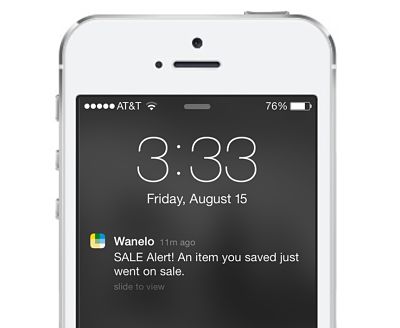
Not all of us shop on a whim. We wait for the right deal or a flash sale to shop like a boss! So if the price of a product – that a consumer previously showed interest in – dropped, make sure (s)he hears it from you first through push. After all, who wants to miss out on a deal? This is all but a tactic to nudge them to make interaction on the website.

3. Notify subscribers about an ongoing sale

You may run different discounts for different products. Whether it an end of season sale or a limited period discount – make sure you catch the attention of your consumers before their focus shifts on some other online store. A real-time notification and they will get instantly hooked!

4. Offer location-based tips and discounts

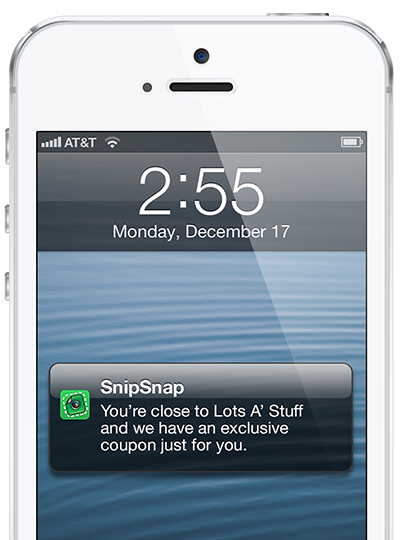
This is a form of hyper-personalization, and will surely bag you a quick conversion. If your website also has a physical store and the prospective buyer happens to be in the vicinity, shoot a quick message to nudge an action from him or her.

5. Re-engage inactive customers

The market is literally spoilt for choice. And consumers today like to hop from one online store to another. So it isn’t surprising to search for a hack that can help you re-engage with such dormant buyers. Pique their interest by sending a notification around a referral program you have started or any other offer that may add value to them.

6. Validate your customers

Just because the consumers have created an account or shared contact details on your website doesn’t mean you take them for granted. Validate their actions by sending a small “thank you” push notification or best – offer them sort of a discount. They would dig that!

7. Leverage social proof

Consumers can be a little hesitant to take the plunge and buy something online. But you can resolve that with the push technology. Show them how many other consumers have bought the same product or how happy they are with your services. A little social proofing goes a long way!

8. Cross-sell and upsell

If your consumers have already chosen a product, don’t let that stop you from increasing the average order value. Give recommendations. Entice with them an add-on (cross-sell) or show them an upgraded version of the product chosen (upsell).

9. Keep the customers informed of their purchases

Once they have ordered a product, make sure you keep them informed about its shipping details through real-time push notifications. That would take some burden off their shoulders!

10. Retarget product or service drop-offs

This kind of messaging is apt for those consumers who put the products in the cart but leave the checkout process mid-way. As they still haven’t left the website, it gives you an excellent opportunity to send a reminder about the cart.

11. Send “back-in-stock alerts”

Your consumer excitedly came to your website to buy a specific product but found it to be out of stock. Don’t let that be the end of it. Once the product is restocked, send a push message updating him or her about the same.

12. Recommend products

So you noticed a consumer checking out a range of sci-fi novels on your eCommerce store. You can pop-up and recommend sci-fi non-fiction that would interest him. Consumers are lazy by nature. If you do a majority of the homework for them, they would love you!

13. Ask for customer feedback on product delivery

Getting feedback is an old-age marketing tactic but it works well because it makes the customers feel important. So once the order has been delivered, send a push message asking for a “token of affection”.

14. Inform about reward loyalty programs

This is a slightly targeted tactic. Make a list of long-standing customers and send them a notification – thanking them for being loyal and offering a credit of $10 or so to show your gratitude! They would hop to your website in a flash!

The Don’ts consider using Web Push Notifications

An effective Web Push Notification campaign can easily outperform Email Marketing and other sorts of campaigns, that is if executed well. After having done some discussion on the ‘Do’s’, here are some ‘Don’ts’ that you must keep in mind when dealing with Web Push Notifications:

  • There isn’t a good idea to get too greedy. If you are too frequent with sending notifications to your customers, close to a 10% users decide to opt-out solely for that reason. Instead, it is more relevant for you to send more contextual notifications based on their behavior and interests and your engagement rate is bound to go higher.
  • Relying on native opt-in prompts? Well, you shouldn’t. Although you might witness a higher opt-in rate initially this will only result in a high amount of churn.
  • If you are keen on using the native prompt, the better and more effective idea would be to build a custom prompt that pops-up right before the native prompt. This will result in better communication of your brand. Even if a user decides to deny it, a custom prompt will enable you to ask again later.
  • It is important to remember the purpose of push notifications. Basically, push notifications are meant to drive users to click and engage with your business. Therefore, the platform isn’t really ideal to explain your customer about detailed and finer points that you have to offer. Instead, link a landing page where your offers are more explained. Remember, the best performing notifications are usually the ones that have catchy titles, precise descriptions, and vivid images.

Over to you

Frederic Voyer, CEO, Swaaap.com aptly puts it right: “Push notifications have been a main factor to ensure that the users in our community are engaged and actively interacting with each other to meet each other’s business needs.”

So what are you waiting for? Get up and get going!

2020: An Era Of Personalized Digital Marketing

Too much data often gives marketers a massive headache! Given the amount of information that is available in the digital space, this is almost inevitable. Today, there are multiple databases within divergent fields, functioning on distinct formulas.

This means yielding effective results in all marketing efforts is even a bigger task because customers now yearn for personalization. The point is any marketer, brand or organization can deliver products and services.

But a successful marketer, brand or organization will deliver the right kinds of products and services the way customers want, how they want and when they want. Thanks to personalized digital marketing, that is easily achievable.

The rise of behavior-based sales triggers

The foundation of personalization is customer data. This makes data acquisition an utmost priority. Despite the abundance of channels, the key is to ask the right questions and getting data-based answers that can give a clear picture of what the customers want.

According to a report by Kissmetrics, the more a customer is engaged with a brand, the better his or her response to the brand will be. Amazon, for instance, is known for sending out emails of recommended items – an observation made solely by the customer’s shopping history with it.

consumers-appreciate-personalized-marketing-etailinggroup

Such triggers witnessed a 125% higher open rate than other types of email marketing. This is just one example of personalization. Content is of prime importance too! Boring content won’t generate the number of leads marketers desire.

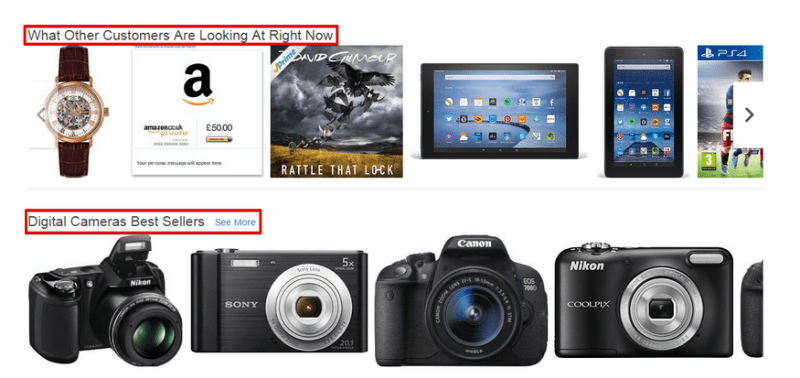
Amazon targets the right person at the right time via product recommendations. Check it out:

12

A study by Aberdeen Group Research suggests a rise in conversion rates by 10% provided the content is tailored as per the needs and requirements of the customers. Marketers can curate the right kind of content by asking three questions:

  • Is my content responding to their interests?
  • Is content relevant to them at this moment?
  • How am I going to distribute my content?

When it comes to targeting consumers, marketing efforts can never be too customized. That has major brands working hard to uncover new innovations.

The struggle is real

Despite a significant rise in popularity of tailored marketing efforts, marketers still struggle with effective personalization and online targeting. And there is data to prove that such is the case.

According to a study conducted by mobile marketing platform “Kahuna”, 36% of marketers report that personalizing behaviors across channels is still an expected channel in 2016.

46% of companies that technology legacy is one of the biggest barriers to their personalization efforts. Majority of brands ranked themselves below average when it came to extracting useful insights from their customer data.

Capture

How to give the present scenario an uplift

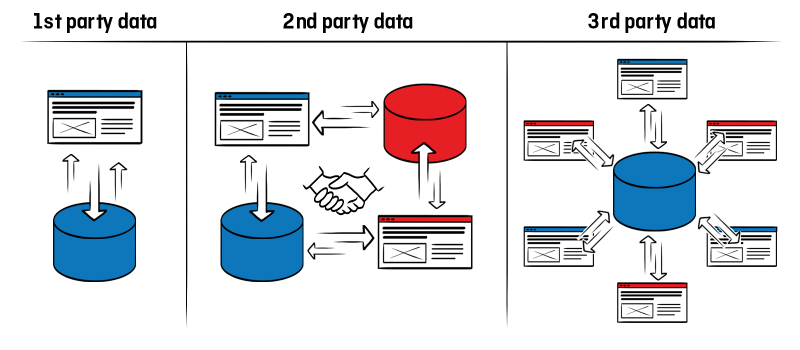
There are three types of personalized information that marketers can make use of:

1. First-party

It is that kind of data that you have gathered as a part of your business operations. Here, the customers consent to share information. It is easy to learn from customer-browsing patterns, point-of-sale transactions, etc.

2. Second-party

This is the kind of data that comes from the competition. Apart from all the benefits of first-party information, the data is received from those partners who are usually connected to the same customers in more ways than a direct transaction.

3. Third-party

This refers to the marketing lists that companies buy to identify and understand the target audience better. Unfortunately, this might not always be a wise option.

There are many data vendors who, under the pretext of discounted prices, sell irrelevant or invalid customer data that ultimately hamper the marketing activities of the companies.

So to make the most of third-party information, marketers should be sure of the sources.

first-party

A digital marketing strategy needs to be frequently revised to stay successful.

The latest trends to keep an eye on in 2019

Technology keeps evolving and we all need to keep up with these latest trends to make sure that we develop successful marketing tactics. It’s the perfect time to reflect on what worked the past year and how the latest trends will affect our marketing strategies this year.

    • Artificial Intelligence: AI will supposedly take over the world! Or may just the world’s simpler jobs. It is great to analyze consumer behavior and search patterns, utilizing data from social media platforms to help businesses understand how users and customers find their products and services.


  • Chatbots: this will continue to be an important part of digital marketing this year as well. This AI-based tech uses instant messaging to chat in real-time, day or night, with your customers or site visitors. Many customers tend to prefer chatbots as they are responsive, prompt in answering, recalls their business history well and also never lose patience.
  • Video marketing: Don’t just think of Youtube here. To witness higher engagement with your video marketing, make video posts, start live broadcast on various social media platforms. It is gaining steady popularity with a large number of businesses using it in the form of interviews, product demo, and ‘behind the scenes’ events, how products are made etc.
  • Social messaging apps: Since people are spending more of their time messaging with each other, it makes total sense to market your company’s services where your potential customers are spending time. Implementing this can be very useful in sending messages to customers directly as they allow personalization, further adding value to the customer experience.
  • Voice search and smart speakers: The increasing use of voice search has made it important for companies to rethink their digital marketing strategies this year. Voice search plays an important role in providing all the relevant information that users are searching for through audio content. Many brands have included it already in their digital marketing strategies to be able to deliver value-based content effectively.


Wigzo: A perfect tool for delivering new-age personalization services

Every customer is different and desires to engage with the brand in a different way that is driven by personal preferences and interests. In this time and age, customers are the “king of the market” in the truest sense.

Therefore, it is a challenge for marketers to consider all such individual differences and personalize their communication with the target audience to fit their expectations.

wigzo

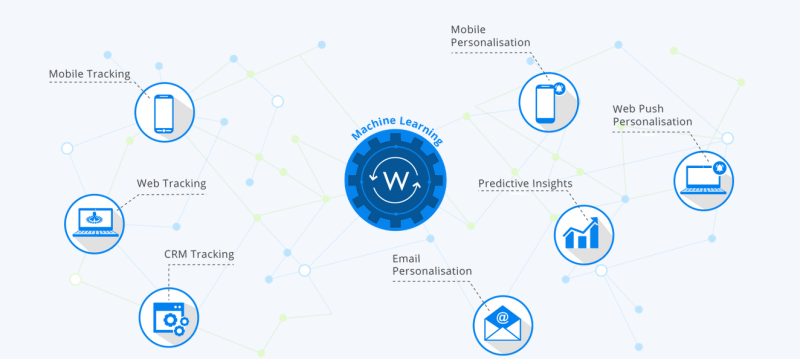
Wigzo, a marketing automation suite, offers solutions that create personalized experiences across all customer touchpoints from a single, integrated digital marketing platform.

It helps brands forge an interactive relationship with the customers based on real-time, bespoke communication, spurring them to convert their purchasing intent into action.

It leverages Big Data Technology to bring relevance to the customer data, and empower it with predictive insights and intelligence to communicate the relevant and the right message to the customers.

Wigzo syncs Prediction Technology and Algorithmic Merchandising to generate content based on customers’ browsing data, app behavior, purchase behavior and search behavior to enable personalized communication across all channels such as Email, Onsite, Push, and Social.

Conclusion

48% of customers agree they purchase more when marketers leverage their interests and buying behavior to personalize the experience across channels. In short, customers today expect an individual experience. Personalization is not an option anymore. It is a mandate that all marketers, brands, and organizations must take seriously!

7 Statistics That Prove The Power Of Push Notifications And What Your Users Really Want

Push notifications are a common way for businesses to get their customer’s attention back to their app. It is like a reminder to the user that they have something to look forward to in the app. The tactic has proven itself to be effective in re-engaging inactive users and boosting in-app conversions.

7 statistics that prove the effectiveness of push notifications

1. Push notifications boost the app engagement by 88%

Most mobile apps get downloaded when their acquisition campaigns are ongoing. But with competing apps entering the market every day, it is becoming harder to keep the engagement levels of users, high. Push notifications are proven to boost the app sessions and engagement by serving as a subtle reminder to the user.

push-engagement

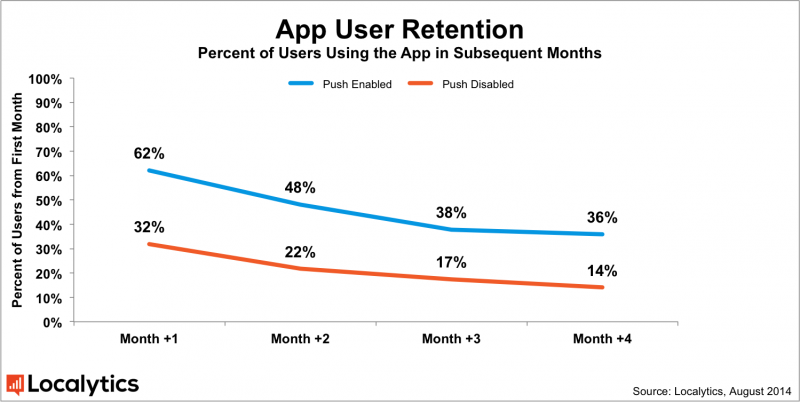
2. Push notification boost app retention rates 2X

The higher the engagement rates, the higher are the retention rates as well. In simpler words, as long as a user remains engaged with your business, he is more likely to stay. Since push notifications nudge him to launch the app, they improve the user retention rates as well.

push_retention

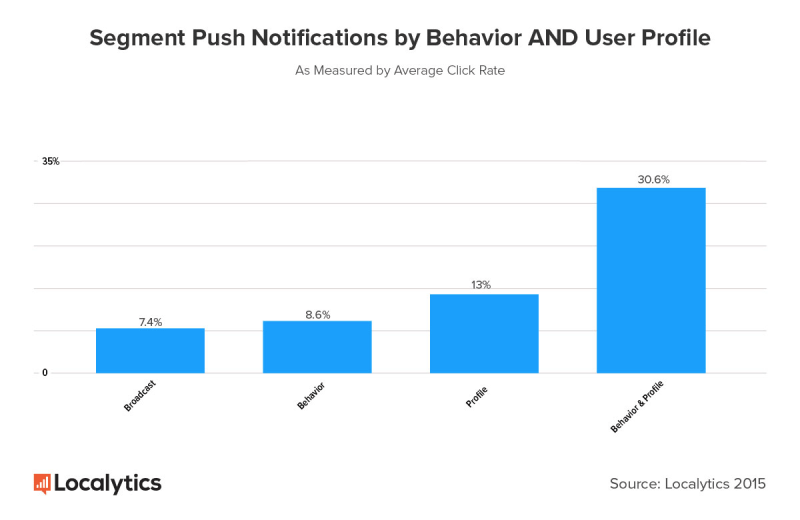
3. Personalized push notifications have a higher click-through rate

Push notifications were initially just used to update users of new features or call them back with generalised messages. Today in times of personalization, push notifications are proven to perform better when they take into account user data like his demographics and in-app behaviour.

personalized-push

4. Android users more receptive to push notifications

A new report suggests that push notifications are particularly a very powerful marketing and engagement tool – especially for Android users. Android smartphone users have a 100% opt-in compared to those on iOS.

Screen-Shot-2016-10-01-at-11.58.38-PM

5. 65% of users return when push is enabled

This one proves just how compelling push notifications are to your app stickiness cause As 65% of the users tend to return to an app when push is enabled while those who do not have push enabled only 19% return within the span of 30 days. Mobile retention is a major challenge for brands but push ensures the users are consistently exposed to your app.


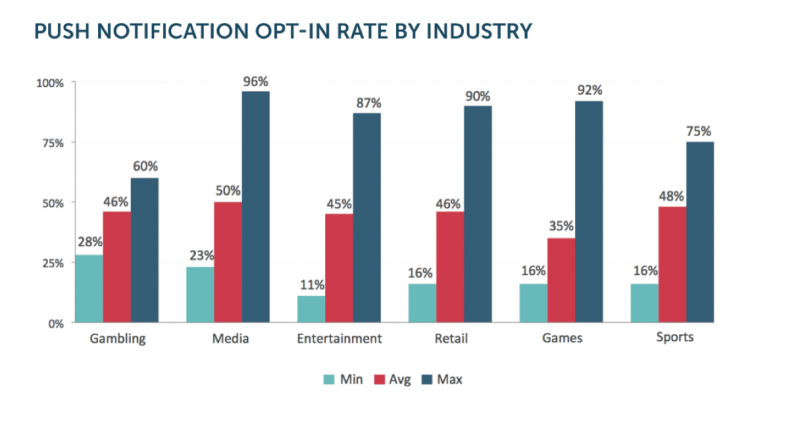
6. Mobile users actually opt-in for push notifications, but the rate varies by industry

The first and foremost statistic is to clear the air about push notifications being too nosey. Smartphone users were actually opt-in for these notifications in most cases. The catch here being, when they know that the app will have something valuable to offer to them whenever it touches base. There are almost 50% of users who opt to push and find them useful.

push-notification-opt-in-rate

7. Rich push notifications increase direct open rate up to 56%

Rich push notifications are the ones you use pictures, GIFs, videos and audios in to engage app users.  These kinds of notifications significantly increase your direct open rates catching full attention of the user mesmerising them.

But these numbers may vary from business to business, depending on the strategies they are backed by. It is important for marketers to first understand their user’s typical behaviour and identify a notification frequency that he is more likely to convert on, instead of getting irritated.

Types of push notifications that users want

But before you get started with all the strategizing, let’s take a look at the 6 types of push notifications that your users actually want.

1. Highly functional to make life easy

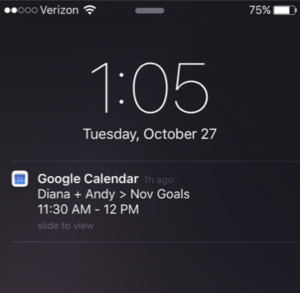
There are innumerable calls that I’m required to take in a day. There are times when I remember some and totally forget about the others, and am taken aback when the client calls – totally unprepared! But if I had a push notification sent to me by my calendar 24 hours before, there would never be a chance of goof-ups. Like this one here:

high_functional

Push notifications that are simply functional and serve as a life hack are something that everyone needs. Because let’s face it, we do want things to get simpler for us and not all of us have the privilege of a PA to remind us of every little thing.

For instance, this travel app’s push notification is pretty nifty for those who are like me – straying a little too far from the boarding gate to kill boredom!

2. Simply encouraging to keep going

An app user could discontinue a session or simply become inactive because he isn’t really moving forward in your app or hasn’t found anything new to keep him encouraged. This increases the chances of a churn.

Push notifications that simply encourage a user to come back to the app because there’s something valuable for him in the end, are great for engagement. For instance, I haven’t used the 7 minutes app for a while now but I love the quick message I get every other day to ‘achieve my goals’ – I do open the app, but am simply a little too lazy to get to the workout part!

3. Location personalized messages

Imagine yourself sitting on a lonely beach and getting notified of a sale running on your favourite eCommerce app. Now you know they aren’t going to deliver the products to you at the beach, you’re simply going to get irritated for not being able to avail all the wonderful discounts.

Now if the app personalized its push notifications based on your location, it would show you discounts that you can avail close by. In fact, according to Localytics, 34% of smartphone users prefer push notifications based on their location.

location-based-push-notification

4. Stimulating excitement

Do you have a launch lined up or a sale coming up? It is a great idea to build up the excitement with push notifications. Let them know what’s headed their way but give out just as much information that will nudge them to use your app to know more.

Tapping into positive emotions like excitement and curiosity of users can help you engage them better and even get higher in-app conversions from your campaigns. Like I would be really excited if I knew products I put in my wishlist went up on sale!

simulating

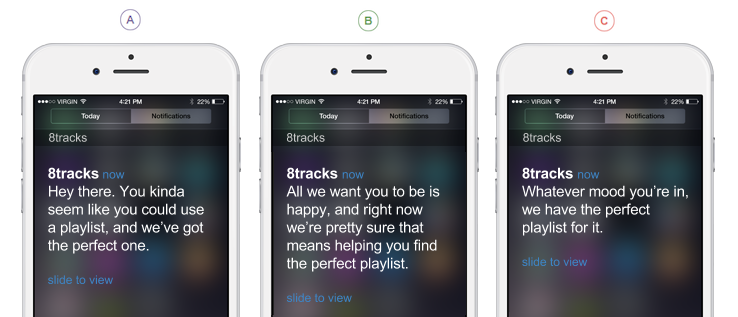
You could also base these notifications around the last activity of your users, making the messaging all the more contextual. For example, 8 tracks use a quirky tone to reach out to users who had previously used the app to look for playlists.

simulating_2

5. Simple and important alerts

If you have a news app or one that updates industry trends regularly, your users are that segment of the audience that wants to stay abreast with it all. Having missed something important is probably going to affect them in one way or the other.

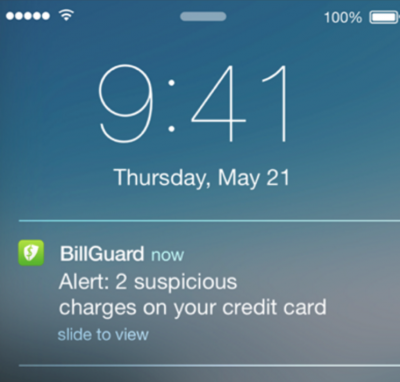
Simple push notifications that alert the user of important news and updates are the best! They serve the purpose of adding value to the user, not cluttering their notification centre and getting them back to the app.

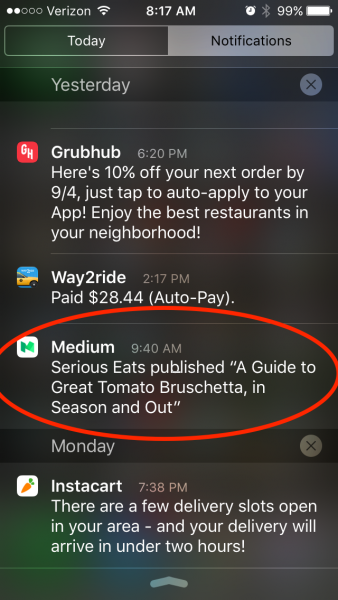
For instance, Medium sends me a very simple push notification every time someone I follow, publishes a new post. Straightforward and does the trick!

medium-push-notification

And this one here that is mechanical – but the situation calls for it!

%medium.png

6. Encouraging to continue an activity

There are going to be times when an app user leaves without completing a certain action in your app. It could be a game level that he suddenly got distracted from or cart items that he did not complete the checkout on.

Push notifications that let the user pick up from where they left with a quick reminder of what they’ve left behind, are proven to get more click-throughs and app sessions. Because it was an activity that the user was interested in, so it becomes easier convincing him to come back.

cart-push-notification-350x400

All your app users are different and they will certainly interact with your app in different ways. It is important to track their in-app activity to be able to create campaigns that stimulate action. The more data you use to personalize your push notifications, the higher are the chances of the user coming back to your app.

We wrote an 8 step guide to create powerful push notifications for your app using Wigzo a while back to help marketers create an effective strategy. You can read it here: How to create an effective push notifications campaign.

request_a_demo_wigzo