5 Ways Personalization and Segmentation Are Changing Email Marketing

In years past, personalization and segmentation may have been optional, but no more. In 2018, marketers have to meet expectations and that means creating relevant, personalized messages that subscribers want to read.

Research shows marketers lean on email marketing to create a personalized experience for customers, compared to other options:

MarketingCharts email personalization chart

There’s no question, there’s a lot of power behind personalization and segmentation.

1. Increased revenue through advanced segmentation

Segmenting email contacts into specific groups can give your bottom line a boost. Marketers have noted a 760% increase in revenue from segmented campaigns, according to Campaign Monitor research.

Why does segmentation impact revenue? Grouping contacts by location, gender, age, job title, or buying history, gives you the opportunity to send emails that are more in-tune with what subscribers are interested in. As a result, subscribers are more apt to open your emails, click through, and convert.

For continued success, segment your segments. Start breaking your segmented lists into even smaller groups. For instance, take your ‘female customers’ list and create a list of ‘VIP female customers’ that buy from you regularly.

2. Better engagement through self-segmentation

Customers are embracing the idea of self-segmentation too. Rather than segment email contacts yourself, why not let subscribers do it for you?

Marketers are using email preference centers to give subscribers the power to select their interests. Penguin Random House directs its subscribers to the preference center below. It gives subscribers the power to self-select the book genres they’re most interested in. In return, subscribers receive emails that provide book suggestions they’re excited about.

Penquin Random House Preference Center

Marketers are also giving website visitors the ability to join specific newsletters. BuzzFeed, gives visitors the chance to sign up for newsletters that are based on the content they read. For instance, if a visitor reads an article about cats, a form pops up asking the visitor to join a specific cat newsletter.

BuzzFeed Newsletter signup

This kind of self-segmentation removes any doubt about categorizing a subscriber. As a result, engagement climbs because subscribers see the content they want in their inbox.

3. Stronger relationships built through dynamic content

Marketers have figured out how to create personalized emails without spending a ton of time manually tweaking emails. How? Dynamic content.

Dynamic content allows marketers to create one email, but customize blocks of it for certain subscribers. Let’s say you’re hosting a sale at both of your stores in Fresno and Los Angeles. Through dynamic content, you can localize the images and content. The subscribers in Fresno see a picture of their local store and those in LA see their hometown store.

Dynamic content is personalized. When subscribers open the email they think, “This company gets me.” With every dynamically personalized email, you build a stronger relationship with your customer.

4. Eased workload via automation and integrations

The need to create more personalized content sounds like more work for marketers, right? It doesn’t have to be if you’re using an email service provider that has automation features and useful integrations.

Automation is a must for marketers looking to save time. Using automation, you can send emails automatically. That’s right. You can set up triggers so emails that you pre-make are sent to subscribers when they meet a certain condition.

For instance, when a subscriber joins your newsletter that action can trigger a welcome email. When a subscriber makes a purchase, a confirmation email is triggered. You can even trigger emails based on a specific date, so Valentine’s Day email can arrive in inboxes a week before the holiday.

In addition, marketers should lean into integrations.

Integrations let you sync platforms for ease of use. For instance, Campaign Monitor integrates with Facebook so you can add a subscription form to your Facebook page and every contact collected flows into your Campaign Monitor account.

Campaign Monitor has a plethora of integrations including Magento, WooCommerce, Shopify, and Receiptful, just to name a few.

It’s these simplified processes that have become crucial to marketers as they’re asked to personalize more and more campaigns.

5. An increasing need to collect data

To personalize emails, you have to know your customers. That means you have to collect data on an ongoing basis.

Marketers are getting more sophisticated when it comes to data collection. When a customer signs up for a webinar, downloads a white paper, makes a purchase, or interacts with a social ad, they’re asking for new pieces of information.

As information rolls in, marketers use the data to build customer personas. These personas are meant to help marketers visualize real customers with details that specify age, location, interest, buying activity, etc.

Every new piece of information strengthens a persona and helps marketers create tailored content.

5 Marketing Automation Examples Every Business Should Try

Marketing automation is your company’s best friend.

Actions that fall into the marketing automation category can help you streamline essential tasks and optimize the overall efficiency of your marketing campaign. From emails to exclusive content, marketing automation can help you manage your campaign and maximize your results.

Given the myriad of benefits offered by this handy strategy, it’s no wonder so many companies use marketing automation to maximize their organization’s performance. It’s not uncommon for business leaders to question the value of marketing automation.

Best Marketing Automation Examples

1. Welcome emails

welcome-email


So, you’ve just earned yourself a new client — congratulations! Don’t let your joy over your recent acquisition overshadow your need to keep this new customer loyal. Fortunately, with marketing automation tactics, you can welcome every new client who joins your business.

Sending a welcome email is more than a great way to create a positive first impression. On average, welcome emails can help you generate 320 percent more revenue than compared to a promotional email.

They’re also more likely to lead to clicks and opens too.

It takes a well-crafted and strategically outlined message to reap these benefits.

2. Win-back programs

win-back-email

You can’t keep 100 percent of your clients dedicated to your services — but you can improve your existing client retention with marketing automation. Win-back programs are the perfect way to reconnect with your clients and reignite interest in your brand or services.

Dropbox, a company that offers cloud storage services, provides an excellent marketing automation example when it comes to re-establishing contact with past clients or at-risk customers.

3. Downloadable gated content

marketing-automation-gated-content-web

Gated content is useful for a handful of reasons.

Not only do you get to generate new leads but you also get to provide users with helpful information. That’s why downloadable gated content is a proven strategy for lead generation, as well as another example of marketing automation.

4. Lead magnets

lead-magnet

For companies today, getting leads can take a lot of time and energy.

In marketing, your magnets are how you go about earning your leads. Magnets typically consist of any measures that help you gain a user’s information. These measures can include video series, exclusive podcasts, and even contests.

However, it’s a time-consuming process.

Fortunately, lead magnets are easy to automate.

5. Abandoned shopping cart emails

cart-abandonment-email

Surveys show that roughly 54 percent of consumers regain interest in a company after receiving a reminder email. So, don’t get discouraged by abandoned shopping carts just yet. You can use marketing automation to motivate those shoppers to check out.

If you operate an eCommerce business, for example, and have found that you deal with consumers leaving items unpurchased in their virtual shopping carts, you can start sending out an automated abandoned shopping cart email to improve your targeting efforts.

5 Key SMS Lead Generation Tactics to Grow Your Business

Your business needs lead to constantly pour in so you can grow. But how do you generate those leads in a way that is affordable and doesn’t take up too much of your team’s time?

We recommend text messages because a) it’s the #1 consumer-preferred channel, and b) the ROI speaks for itself.

You just need the right tactics to help you harness the power of SMS lead generation. That’s why we put together six of the best ones to help you grow your business.

texting-facts-2

SMS Lead Generation Tactics

1. Tell leads to text you in your call-to-actions.

People have to know to text you is an option before they can actually do it, so your SMS needs to be advertised everywhere, including on your:

  • Website
  • Social media pages
  • Emails
  • Landing pages
  • Adwords
  • Any print materials

All you need to add is a simple call-to-action (CTA) on each of these, like:

You can text us your order!

Or.

Text us to get a quote.

You want to tell people to text your business, which is what CTAs can do.

90% of leads who read the other copy on a marketing material will also read your CTA, and the effects of that can be enormous. For example, emails with CTAs can increase click-through rates by 371% and sales by 1617%, while CTAs on social media pages can increase click-through rates by 285%!

CTAs can particularly stand out on your website if you add one to an SMS Chat widget.

2. Fastest to answer leads’ questions with auto-responses.

You’re going to have an influx of leads messaging you once you advertise they can text your business. That means you need a way to respond to them in a timely manner, so leads stick with you instead of moving on to a competitor.

50% of sales go to the first person to respond to the consumer. So that first responder needs to be you if your SMS lead generation strategy is going to be successful. Otherwise, what’s the point of all that texting speed?

Setting up an autoresponder can ensure that your leads always know you’re going to get back to them. You can even start them down the sales funnel while they wait for your response by formatting your autoresponses to include a message like:

Thanks for contacting Pondside Pet Clinic! Text us your pet’s name, species, breed, and reason for appointment, and our techs will get back with you shortly.

Or.

Thanks for choosing Ridge Rentals as your mountain getaway! Tell us your vacation dates and number of expected occupants, and we’ll get back to you with available cabins soon.

Leads love instant gratification like this. It makes them feel like they’re making progress on the need they’re trying to satisfy, plus keeps their hands from being idle and reaching out to other competitors while they wait for your response.

Autoresponse texts are a great tool for new leads from form submissions, too.

3. Create a keyword to capture interest.

80% of marketers say interactive marketing is more effective than static marketing. Keywords can be just that when you use them in fun and creative ways to engage leads.

A keyword is a word people text you to receive information or a deal related to that word.

For example, Little Nan’s, a pop-up cocktail bar in London, got more than 200 new contacts during its opening weekend by advertising a free shot for people who texted the keyword “Nan.”

Your own keyword can be a way for leads to opt-in for content, learn more about a specific product or service, or receive updates on your latest deals. But they’re best utilized when they’re advertised in ways that spark interest and excitement.

Starbucks did a great job of capturing that energy with the bright colors and peppy copy used in its “Frappuccino fun all summer long” keyword campaign.

4. Convert your email subscribers into SMS subscribers

You most likely already have an email subscriber list you use to gather leads. And whether it’s for your blog or industry news, you still have a ton of contacts that are begging to be converted on that list.

Why not start doubling down and engaging them with texts too? You’ll likely get more engagement through text, plus it’s a great way to take a group of contacts you already have (instead of searching for new ones) and further convert them into qualified leads.

All you need to do is ask your email subscribers if they’re interested in opting in for additional perks by joining your SMS subscriber list.

75% of emails are read on smartphones, so between your texts and the emails, your audience will see your business’s message on their phone. And the more times someone sees something, the more likely they are to go from a lead to a customer.

5. Offer perks in exchange for your leads’ numbers.

Perks are not just limited to discounts and VIP clubs (although those are awesome too). They can also include access to free demos, training, tailored blog posts, eBooks, and other educational content that will further qualify your lead. And all your lead has to do to gain access to them is provide their number!

It benefits both of you, moves the lead further down the sales funnel, and gives you their number for future follow-ups if they like what they saw.

Here are some more examples:

  • Provide seminar attendees with a copy of the presentation in exchange for their number
  • Allow people to schedule a demo after they provide their number
  • Offer exclusive eBook series releases when a lead subscribes to them with their number

Just make sure the content you provide is tailored to the audience you’re trying to attract. 66% of people say encountering content that isn’t personalized would stop them from making a purchase.

You can use our Custom Buyer Personas guide to ensure your perks fit the leads you want to target.

Conclusion

The best part about each of the tactics we covered is they keep you compliant since the lead always provides you with their number.

You can only message a lead when they opt-in for your message, and they should always have an ability to opt-out if they decide they no longer want to receive your texts.

7 Tips To Growth Hack Your App Retention Rate

The app market is booming with the increase in smartphone and internet users. Businesses who started off with the conventional websites to cater to their target audience are now moving towards that one device we all spend most of our time on – mobile.

According to VentureBeat, the app economy could double to $101 billion by 2020. This only goes to say how businesses will move their revenue models more towards apps than the web.

app-economy

But with the rise in the number of app in the market, there is also an increasing challenge coming in place – acquiring and then retaining those users.

Smartphone users practically have at least a thousand options in any category of apps that they could download from. Acquiring users is not just a matter of standing out, but also consistently optimizing your marketing strategies and budgets. While acquiring users is something that businesses are still able to execute, retaining them is the tougher part of the model.

The average app user retention rate is considerably low as compared to when the app market started. The reason being that people are spoilt for choice and don’t find a good reason to remain loyal to one app – anything that promises a better experience or is trending in the market, is what they download.

For instance, what do you think is the current retention rate of games with Pokemon Go trending across the world?

The answer is low, very low.

Don’t believe us? Here’s what an average app’s retention problem looks like:

app-retention-problem-300x202@2x

How to boost your app retention rate starting today

The true key to measuring the retention rate of your app is to understand how frequently your users are returning to it – starting from the first time they downloaded and used the app.

This metric plays a big role in the mobile growth stack because higher the retention rate, greater are the chances of the user recommending your app in his circles and helping you grow it organically.

So here’s taking a look at some ways to boost your app retention rate:

7 Tips To Growth Hack Your App Retention Rate

1. Personalized onboarding

The first and foremost thing that determines how a user is going to use your app, is the onboarding you offer. It is important to understand who your target users are, where they are coming from and what they are looking for, to give them an onboarding accordingly.

It is important that you personalize their experience right from the beginning. This not just helps you gather the important data from the user, but also ensure he explores the app as you’d prefer. It is like giving your user a direction to move in so that he doesn’t get confused and leave the app.

For instance, beats music starts off its onboarding process in a simple step-by-step manner. They ask the user for the information they think is important and would help them personalize their in-app experience.

beats-music-onboarding-

2. Push notifications

While some app developers and marketers consider push notifications intrusive, the truth is that they are actually not. Smartphone users always have the option to turn on/off the notifications as well as define the way they want to be notified – via an alert, a message, a badge icon, etc.

Implementing push notifications in your app helps you create a retention strategy wherein you can reach out to your users time and again with a personalized message. The notification serves as a reminder of the app to the user and a nudge to bring him back to it. Although, it is important that you fully understand your user’s behaviour on your app and test the frequency of push notifications that you must maintain.

user-retention-urban-airship-400x156@2x

Almost 80% of smartphone users opt in to push notifications from the apps they download. The reason is that they expect some value from the app, and don’t want to miss out on any news. Although, you have to ensure that you’re adding value to them each time, or they’ll also be the fastest to opt out.

Companies like Wigzo provide you with the tools that help you create effective push notification campaigns. It enables you to segment your audience and target them with custom campaigns, to drive even more conversions.

Wondering how to create the perfect push notification? Here’s your guide: The guide to leveraging from push notifications.

3. Embracing wearables

Wearables are a big part of effective mobile marketing strategies. In fact, according to PWC, the wearable technology is all set for exponential growth and marketers will definitely need to include them in their business strategies.

Since wearables are devices that are constantly going to remain with a user, they present an opportunity for marketers to communicate with them more often. Be it notifications, reminders or simply updates about the app, using wearables will ensure your app remains at the top of their minds at all times.

For instance, Kim Kardashian West’s Forbes recognised app actually uses wearable to remind the users of an event occurring in the app or to bring him back with a message.

kim-k-wearables-400x263@2x

4. Creating a community

Create a community of your users – right from the beginning. Be it a Facebook group or in-app community, give them a platform to consistently network with each other as well as communicate with you.

This also gives you the opportunity to send out broadcast messages related to app updates, events and other marketing campaigns.

Another aspect that a community takes care of, includes addressing user concerns on time. Most of the times apps lose their users simply because they were not able to address a problem or resolve an issue stated by him. This also leads to the user losing interest and faith in the app, moving on to another from the mobile market.

5. Implement a sharing strategy

Take a look at your app and analyze if you’ve made it easy for users to share your app and its content. It is imperative to encourage users to share with friends as it is an essential functionality for apps across verticals and you need to be readily available to aid its vitality. Focus on your app’s UX and UI to maximize the ease of sharing vital information when necessary the most.  

Incentives such as referral strategies can also propel the growth and vitality of our app. Codes, coupons, invitations are just some of the ways to go for incentivizing referrals. Each app is unique thus you need to think about incentives that will work the best with your product.

A good referral strategy accounts for ways to enrich user experience bespoke to the app, simultaneously keeping in mind the goal of encouraging a chain of referrals.

6. In-app chats

Another way to keep your users hooked to your app, is to implement in-app chats. This ensures that the user doesn’t need to switch to another app just to communicate with his friends. If he has the ability to chat simultaneously with his people, he is more likely to stay longer on the app as well as have a higher retention rate.

This also opens the opportunity for you to ask the user to invite his friends and family to the app. If the user is happy with his in-app experience, he will be sure to recommend it in his circles – helping you grow organically, as well as boosting your in-app chat strategy. One needs to have his people around all the time, right?

And of course,

7. Email campaigns

Irrespective of what your app offers, email marketing is something you just can’t exclude from your user retention strategy. Emails serve as a direct channel for communicating with your users – they are more likely to only focus on what you have to say and convert on the same.

But the ground rules remain the same, your email needs to highly personalized and contextual in nature, or you’re just going to end up in spam.

For instance, here’s a user recovery email campaign by Runkeeper – it subtly reminds the user that he hasn’t run for a few days – at the same time pitching to bring him back to the app.

runkeeper-email-marketing-

Over to you

Just like other marketing strategies, it is important to implement personalization in apps as well. It is not just about the acquisition campaign you run, but also about how well you’re able to optimize a user’s experience in-app and drive him towards a conversion

5 Best Shopify Marketing Automation Apps (2020)

Most businesses start small. This is where Shopify excels because the platform provides a simple and easy-to-use solution where you can set up a basic online store in seconds. However, when you’re looking for new ways of driving business growth, whether it increases your sales and conversions, streamlining your drop-shipping process, or improving your email marketing metrics, you’ll have to go outside of Shopify to find suitable solutions.

Compared to all other eCommerce platforms in the market, Shopify is at the top rank when it comes to the availability of a wide range of high-quality apps or extensions. Take the time to visit and read through app descriptions at the Shopify App Store.

Best Shopify Marketing Automation Apps

1. Wigzo

wigzo

Wigzo is a marketing automation app that uses numerous channels to increase sales. It has an omnichannel marketing strategy to resolve to generate more revenue. The app also has customer segmentation functionality to split customers into groups based on their interests and purchases.

You can choose emails from amazing templates or can create your own emails with a dedicated builder. Each channel is customizable to be compatible with your brand design and style. It has different pre-built automation workflows that save time and also create custom campaigns for cart recovery.

Click Here To Try

2. Omnisend

omnisend

Omnisend is an omnichannel marketing automation platform built for eCommerce. This all-in-one marketing automation platform is a chock-full of robust features that allow eCommerce marketers to create better relationships with their customers. Omnisend’s ultra-personalized targeting and omnichannel features mean that marketers can make sure their messages are always relevant.

Omnisend allows you to add several channels to the same automation workflow: email, SMS, web push notifications, Facebook, WhatsApp, Viber, and more. Easy email capture features make list building easy, and smart segmentation means you can send the right message to the right person at the right time.

Omnisend also integrates seamlessly with Shopify and makes browse and cart abandonment messages a snap.

Click Here To Try

3. Flashyapp Marketing Automation

flashyapp-marketing-automation

Flashy is the all-in-one solution for e-commerce marketers, they have figured out the best way to understand, communicate, and get results from your customers. They offer smart popups, marketing automation, email, and SMS marketing while all the channels can be highly personalized to the customer based on previous purchases, cart value, and more. To make your life easy, once you signed up you will get the must-have automation for any e-commerce store: welcome series, cart & browse abandonment, win back automation, and more. One of the things they’ve invested in lately is the marketplace, where you can find the best performing email templates, popups, and marketing automation funnels.

Click Here To Try

4. ContactPigeon

contactpigeon

Email marketing for a growing Shopify store is not enough in 2019. You need to create multiple, personalized touchpoints with your customers to gradually build relationships, convert and increase their retention. This is what ContactPigeon’s marketing automation platform does best.

Armed with built-in eCommerce recipes for easy onboarding, allows a store manager to build automation across multiple channels including email, push notification, and SMS and create a behavioral-driven omnichannel marketing strategy. The tool also contains easy drag and drop automation builder, dynamic segmentation, other features like list building & exit intent pop-ups, as well as a detailed analytics dashboard to track your campaigns’ conversions and performance.

Click Here To Try

5. Pop-up Window

popup-windows

When you’re first starting out with an online store, the idea of coming up with a marketing strategy can be a tad overwhelming. Pop-Up Window, the Shopify app from LifterApps, is a go-to app to increase sales. It’s straightforward to use and its purpose is clear – show a pop-up to notify users about offers and ask them to sign-up.

All of the app’s pop-up windows are responsive and renders great on any device – whether laptop, tablet, or mobile. All the plans include email signup forms, reports of subscribers, and coupon codes.

Click Here To Try

5 Essential SMS Marketing Tips

Here are 5 essential SMS tips and marketing examples to help you create a high-quality, high-return mobile marketing strategy. Combined with SMS, rich media messaging (RMM) can take marketing campaigns to the next level.

5 SMS Marketing Tips

1. Ask for Permission

Asking for permission isn’t mandatory, but it’s better for you. Instead of creating campaigns that recipients never read, you’ll spend time nurturing relationships with customers who want to receive notifications.

As the first and last thing many people look at during their waking hours, smartphones are seen as personal space. You should take care to get explicit permission before marketing to customers via your SMS marketing efforts.

You can get this permission two main ways:

  1. Create campaign collateral by asking customers to text an opt-in keyword to a short code, for example, “Text YES to 12345 to receive exclusive promotions!”
  2. Ask customers to check an opt-in box — similar to opting in to receive an e-newsletter — when they check out, request information, or sign up for another service on your website.

sms-example

Include the following three sections when you send messages:

  • Expectations. Tell customers upfront about how frequently you plan to send messages and what kind of content recipients will receive.
  • Opt-out option. Make sure that it’s always clear how your customers can stop receiving SMS marketing messages from you.
  • Call to action (CTA). Each message should include a brief message and a CTA that encourages customers to act. For example, “Click here to confirm enrollment.”

2. Identify Optimal Delivery Times

After you let recipients know how many messages to expect from you when they sign up, be thoughtful with your delivery. It’s important to message customers regularly so that you remain top of mind, but you don’t want to send at times when you’ll be ignored or, worse, at times when you’ll annoy them.

Start small with four to five messages per month for the first month or two. Send your strongest content first so that, with this strategy, recipients look forward to seeing more of your messages. Then ramp up to 10 messages a month.

Timing your messages also gives you an opportunity to test different messaging types for future campaign improvements, for example, test if it’s beneficial to send surveys early in the customer lifecycle or later.

VoiceSage users can set up drip campaigns that deliver a series of messages at specific times. You don’t have to manually schedule messages; instead, you can create all of the messages at once and schedule them to send automatically. The campaign is triggered when a customer completes a specific action. Create a drip campaign for when new customers buy something or sign up for a new service. Make sure each message delivers value to avoid customers unsubscribing from your list.

3. Experiment with Timed Delivery

Even though your customers have their phones next to them nearly 24/7, they don’t want to receive disruptive messages during meals, holidays, or in the middle of the night. Sending messages at the right time ensures customers open and read them. Timing also creates a positive customer experience since messages are sent at convenient times.

Additionally, test your campaign success using metrics, such as open rates and click-through rates, to identify your top customers and regions. Use your market, location, and user data to tailor message delivery times. Send messages based on the specific area or time zone your customers live in, so your offers get to them when they’re most receptive. The best time to send mobile messages is generally between the hours of noon and 3 p.m.

4. Personalize Your Messages

SMS marketing gives your company a unique opportunity to truly personalize messaging and connect with customers one-on-one via text. Take advantage of this by ensuring your recipients feel like a special contact, not just another line on a mailing list. Customers prefer to receive personalized SMS messages and are more likely to move through the sales funnel when they do.

product-tips-sms-1

Take personalization further and segment your customer list so that only certain customers receive relevant messages. For example, you could send promos exclusively to customers who purchased from a group of products, like shoes. Or to customers who bought a specific product, like purple-striped shoes.

5. Make the Value Clear

Just sending a message isn’t enough. Recipients must see value in your message — either in the information, you present or in the offer they receive — if you expect them to act on the promotion.

abandoned-cart-sms-2

To create campaigns that your customers will interact with beyond the open, try:

  • Creating coupons and offers unique to your SMS marketing subscribers list
  • Targeting offers based on customer segments and behaviors (in turn, making the campaign more personal)
  • Switching up your offers to add variety and avoid stagnation or boredom with your campaign

How To Use SMS Marketing To Grow Your Ecommerce Business

A health drink eCommerce brand has developed a cult-like following and opened a staffless store in Manhattan’s trendy Tribeca. So how has a scrappy start-up managed to break through the noise in the saturated wellness beverage market? It’s because of their SMS marketing strategy, and with the right tools and a bit of planning, any small business can implement a similarly powerful text marketing strategy.

Why SMS marketing?

Dirty Lemon has about 100,000 customers and sells mainly online. It’s now grown to the point where it has opened unstaffed stores: in this case, all customers browse and purchase digitally and engagement is carried out via text messaging. Dirty Lemon’s business model shows us that SMS marketing is enduringly popular. Automated marketing with SMS offers an affordable way to reach your customers.

SMS marketing is a source of significant business exposure because of it:

  • doesn’t cost your customer a cent

When you couple this reliability with the shifts in the mobile buyer’s journey, you’re presented with a golden opportunity for marketing your small business.

Ecommerce and SMS marketing

Mobile growth is charging ahead. By 2019, the number of mobile phone users is expected to pass the 5 billion mark. Over the past four years, the share of online traffic from mobile devices has almost doubled.

On top of that, shopping from mobile devices is expected to continue to climb; it’s estimated that smartphones were used in more than $1 trillion U.S retail sales. And the rise of this retail omnichannel experience sees buyers moving across devices as they research, compare, and purchase goods.

Tactics for marketing your small business with SMS

Now that you’ve done the groundwork for a successful SMS marketing campaign, it’s time to focus on optimizing your messaging. Here are a few proven tactics for marketing your small business with SMS.

Updates and alerts

Has a new product just arrived in your online store? Keep your customers informed with an SMS update.

Exclusive deals

Brick and mortar stores know SMS marketing is an effective way to reach customers about discounts. Exclusive deals and coupons have pulling power for eCommerce consumers, too. Julep, an e-commerce beauty retailer, offered a nail polish coupon via SMS, ending with a 17.4 percent purchase conversion rate for customers who clicked on the link.

Personalized rewards

Just because you’re using automated marketing to send your messages doesn’t mean you can’t make the experience personal. A Salesforce study found customers were willing to share more personal data in exchange for personalized marketing offers. One simple way to achieve this with automated marketing technology is to send subscribers birthday wishes with a special reward.

Real-time promotions

A benefit of automated marketing is that you can quickly share real-time promotions. Get creative and draw from special events like holidays and special shopping days like Black Friday and Cyber Monday.

5 Best Customer Retention Strategies For E-commerce

Surviving in the e-commerce industry is not that easy. Customers are always bombarded with amazing adverts trying to convince them to jump ship to another brand, and without a strong customer retention strategy, it just might work. Well, the good news is, if you’ve already convinced a customer to buy once, all you have to do next is give them some sort of incentives to stay, and that’s why we’ve put together 5 powerful customer retention strategies that almost always work.

Customer Retention Strategies for E-commerce

1.  Surprise Gifts and Discounts

gifts-discounts

Customers love to feel appreciated. One way you can show your customers that you appreciate them is by using surprise gifts and discounts. You can offer them a discount on products they frequently purchase, along with a short and sweet message telling them why they are receiving the surprise.

Another way to do this is to make a VIP list for your repeat customers and send them VIP only discounts. This is great for customers because they get a discount, they will feel appreciated, and like they are part of a special club – which they are!

It doesn’t always have to be a discount either, you can send your customers gifts too. For example, you can send them a card on their birthday, and maybe include a voucher for your store.

2.  Provide Excellent Customer Service

This one may seem a little obvious at first, but you need to consider what a company considers excellent customer service doesn’t always match up with what the customer thinks is excellent customer service. In fact, around 75% of brands believe they are customer-centric, but only 30% of customers believe the same. A 2017 study found that 8 out of 10 customers are so frustrated by this that they’re actually willing to pay more to have a better experience.

Here are a couple of ways you can boost your customer service to the next level:

  • Provide a cohesive and consistent experience – a customer should always feel like they’re getting the same care and attention whether you’re talking to them on the phone, via email, or on a live messaging service.
  • Provide multiple contact channels to accommodate a range of communication preferences.
  • Route the right agents to the right customers by assessing the customer’s needs and assigning the agent most skilled in that area.

3.  Customer Surveys

recommend-company-customer-satisfaction-survey-questions

Send your customers a quick online survey to complete to gain a better insight into what’s working, and what isn’t. You’ll never please every customer on every issue, but surveys can help you identify patterns that you’ve missed. A good survey should have a mixture of multiple-choice questions and free text answer fields to allow the customer to express their opinions more thoroughly where needed. Design a strategy for when you’re going to send out a survey – will it be every six months, or once a year?

4.  Keep Customers Informed

Make customers feel a part of your wider team by keeping them up to date on new developments such as new product lines, new partnerships, or exciting milestones for the company. You can do this through a monthly newsletter over email.

5.  Be Personal

email-personalization-example

You’re collecting lots of data on your customers, so use this data to improve their experience. Before reaching out to a customer you should know how they like to be contacted, what they have bought previously, and what previous interactions looked like. Customers don’t want to feel like just another number, and they will become frustrated if they have to repeat the same information over and over. By offering a personalized experience they will feel like a part of your team and associate your company with a smooth and easy experience.

eCommerce Marketing Using Push Notifications in 2020

Growth is becoming increasingly difficult. Marketers across the globe are scouting for innovative methods and tactics to attract users. eCommerce marketing using push notifications is slowly hitting the mainstream, especially in e-commerce. This article talks about how marketers in retail are using this channel to drive business.

There are more than 1.7 Million eCommerce websites on the web today vying for attention. Woah! Yes, you are just like one of the stars in this never-ending universe. This is where the challenge actually starts.

eCommerce Marketing Using Push Notifications

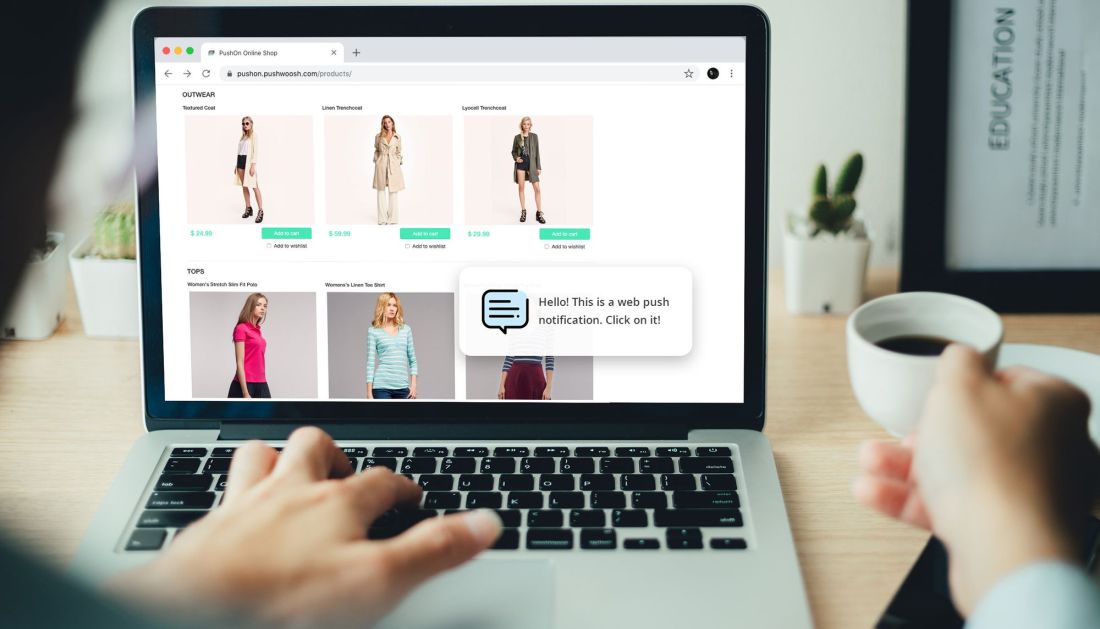
Push notifications are succinct updates sent to the users even when they are not on your website. Due to its crisp approach, there is no beating around the bush, and information is shared in a jiffy. It helps to leverage geographical targeting and communicate in a timely fashion keeping time zones in mind.

Driving Marketing Using Push Notifications

1. Customize your communication

Customize your communication

Receiving a notification that seems tailor-made for the user, sparks interest and increases the chances of them landing on your website. The whole idea is giving them what they want. This becomes extremely easy after opting for User Properties and Events. Specific users can be targeted according to behavior and actions; to trigger a better response. For example, Limeroad sent the above notification only to Men, who showed an interest in purchasing T-shirts.

2. Season Sales / Occasion based

Season Sales Occasion based

Welcoming a new season is one thing no e-commerce business would want to miss. Inspire users with your web push messages to indulge in all the new season collection. You can encourage users to change their wardrobe this season, get a makeover, or impress them with your new dashing collection.

Festivals are a time when users splurge on shopping for relatives, friends, and themselves. An amazing opportunity to convert your users with interesting offers and discounts. You can also send out occasion-based notifications like company anniversaries, end of season sale by lacing it with offers they can resist.

3. New Collection Shout-Out

New Collection Shout-Out-push-notiofications

When you add a new collection, make sure you design your push notification campaign to do a great shout-out for all your users. Just like what Koovs did when they added fresh arrivals to encourage users to try something new. This builds curiosity, and the ‘Fear Of Missing Out’ syndrome will drive users to your website.

4. Flash Sales

Flash Sales

One of the best ways to create a sense of excitement and urgency is to try flash sales. Myntra sends notifications with offers that are time-bound. They also show what they will be missing out on if they do not make a transaction within the given hours. This prompts users to make an immediate purchase. These kinds of notifications will help you drive high traction to your website.

5. Announcements

Announcements

Inform the users about the sale you are going to conduct along with all the specifications so that they look forward to it. You can also encourage them to visit your website to take a sneak peek of what’s in store for them. It helps to build curiosity and excitement, encouraging users to visit your site during the sale.

Why is SMS marketing automation important for your business?

SMS marketing is a somewhat hidden gem amongst the advertising world. It sounds fancy, perhaps even mysterious.

It’s not mysterious at all, however. It’s a vital part of getting your business’s name out there in the mobile-focused world we live in. In fact, most people use SMS every single day.

In-depth Guide on SMS Marketing for Ecommerce (FREE)

What Are The Benefits of SMS Marketing?

You’ll want to work with an SMS marketing firm to conduct the best strategies. Consider these benefits:

Higher Open Rate Than Emails

One of the biggest benefits of SMS marketing is the fact that texts are opened up to 98% of the time when received by your customers. This gives SMS an open rate higher than all other advertising options.

It’s easy for emails to get lost in a spam folder and it’s simple for a customer to throw away a flier they pick up at the mall. But with the prevalence of mobile phones and the popularity of texting, text marketing doesn’t go ignored.

More often then not, your customers will open that text and read its contents.

If you want to find a way to reach your customers more consistently, give SMSing a try.

Cost-Effective

It doesn’t cost much at all to send a text to a customer. Even when sending it to a lot of people, the cost is not a problem. It’s generally much more affordable when you compare it to other marketing options, such as buying a Facebook ad spot.

This makes SMS marketing a great choice for all businesses.

Especially for businesses that are just starting out and are looking for a way to start advertising without spending too much money in one go.

Mobile-Friendly

Being able to present your business as mobile-friendly is incredibly important these days. More and more people are using their mobile devices to do things like shopping and browsing. You don’t want to lose out on that kind of exposure.

SMS marketing is a big part of making your business mobile-friendly and can be a strong asset to your mobile marketing strategy.

Reach a Wide Demographic

Because so many people have cell phones and other mobile devices these days, your customer demographic can widen through the benefits of SMS marketing. Instead of focusing on just one marketing strategy that might only reach one section of your demographic, SMS marketing reaches everyone.

Works With Other Types of Marketing

SMS marketing for eCommerce doesn’t have to simply be a part of advertising all on its own. You can use it alongside all of the other ways you are marketing your business. It can be a quick and easy way for customers to connect to your message.

Use it to get more customers interested in your social media. Maybe offer a discount for anyone wanting to buy through your online website. Want to promote a new product?

Send out an SMS for that.

Fast Delivery

There’s virtually no wait time when it comes to SMSing. Once you press the send button, you can be certain that your customers will receive your message straight away.

The benefits of SMS marketing really shine here because this kind of advertising requires little prep time. There are no materials to gather or printings to wait for. There are no designs to complete or people to contact.

The only thing you need to do is come up with your message and send it away to your customers. And, because we already know that texts are far more likely opened than emails, you can be certain your customers will see your important news as quickly as possible.

Strengthens Customer Engagement

SMSing doesn’t just give you the option to engage with your customers more. It can also give your customers a way to engage with you.

It lets them feel that your business is more accessible. It makes your business become more a part of their lives instead of being just “that one store I go to sometimes”. Instead, you’re there with them on their mobile phone, prompting them to remember you.

Customers Can Opt-In

It’s always a good idea to give your customers an option. It’s great to send out your mass text messages, giving your customers the latest news on your business ventures. Let your customers decide if they’d like to opt-in and it will let them feel more comfortable with your business as a whole.

Plus, seeing how many customers opt-in to those updates can give you information that you can then use for later marketing strategies.

Customers Can Also Opt-Out

Giving customers the option to decline these messages, however, is perhaps even more important. If you keep sending out your texts, wanting to get an uninterested customer engaged, you could end up losing that customer altogether.

It’s better to give them that option to opt-out of these mobile messages instead of driving them away. They may opt-out, but there are other marketing strategies that you can use for those types of customers instead.

Flexible and Customizable

When it comes benefits of SMS marketing, one of the best is the fact that it is so versatile. You can mix and match text messages to fit with different things to help promote your business.

You can announce a sale, give a temporary discount, reward loyal customers, promote a new product, share news, and more, all from SMS.

It’s a great tool to have for any business, both big and small.